Category Archives: Repair

Repair

iPhone 7 Home Button Repair – The Full Story

In this post, the iPhone 7 is mentioned, but the information applies to the iPhone 7 Plus as well.

In previous versions of the iPhone, home button replacement was a simpler repair. The screen gets removed, a flex cable is disconnected, depending on the model, a shield is removed, and then the home button can be unscrewed and popped out. A replacement home button can then be installed and your phone is back to work. There were some earlier versions of iOS that locked phones with home button repairs done by a third party repair companies, displaying Error 53, but backlash forced Apple to eliminate this behavior in later updates. So let’s learn more about the iPhone 7 home button.

How is the iPhone 7 Home Button Different?

iPhone 7 Home Button Repair - the iPhone 3gs home button
iPhone 3gs Home Button

The home button has long been a part of the iPhone, since the first generation. It offered a quick escape option to get back to the home screen from wherever you may have navigated. Traditionally it was an actual physical button that had a click reaction when depressed. This physical motion was translated into an electronic signal which then traveled to the motherboard, letting it know it was time to leave the current app. In the hands of a professional, replacing these buttons was as simple as if they were buttons on your shirt. In the hands of a professional, replacing these buttons was as simple as sewing buttons on your shirt.

iPhone 7 Home Button Repair - the iPhone 7 home button
iPhone 7 Home Button

The iPhone 7 home button works in tandem with the logic board (Apple’s name for motherboards) and a software lock. So there’s not only hardware design involved with this component; it can be paired only with one specific logic board, as defined by unique coding. Additionally, the iPhone 7 home button is not truly a mechanical button at all. It is an indented fingerprint sensor which provides physical feedback via the Taptic Engine, Apple’s component for providing tactile sensations in the form of vibrations.

Starting with the Samsung Galaxy S8 and the LG G6, and now the iPhone X, phone manufacturers will most likely continue to omit a physical home button to fit more screen within the dimensions of the phone.

What Happens When You Replace an iPhone 7 Home Button?

If you replace the iPhone 7 home button with an after-market replacement part or even a different OEM replacement, you will see a message after booting up, “The home button may need service.” After displaying this message, a temporary fix on-screen home button appears.  You can navigate using this on-screen button, but after you’ve grown accustomed to using the actual button, it feels like a compromise. This Accessibility setting can be activated on any iPhone at any time by turning on AssistiveTouch.

iPhone 7 Home Button Repair - on-screen assistance

Why Does Apple Make Home Button Repair Difficult?

There are two possible schools of thought about why Apple would make the home button unique to each phone. Since the button is software controlled, the software lock closes a security hole. Think of the software lock as another unique physical passcode. If your phone is stolen or lost, nobody would be able to pop a new home button in and bypass your Touch ID.

The other possibility is that Apple is tightening the scope of its proprietary components and tools to grab a larger share of the repair market. Apple makes all the money on iPhone 7 home button repairs, at the expense of third-party repair companies.

What Are Other Options for iPhone 7 Home Button Replacement?

If your iPhone 7 home button no longer works, it must be taken to an official Apple store. The repair technicians at this store will use the Calibration Machine, which is shrouded in secrecy. Without AppleCare+ or a warranty, the repair will cost $319 for an iPhone 7 and $349 for an iPhone 7 Plus.


If you are in need of help with your iPhone 7 or iPhone 7 Plus, visit iFixYouri for an iphone repair. If you need iPhone 7 or iPhone 7 Plus Parts for DIY repair, click here.
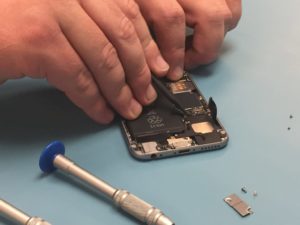
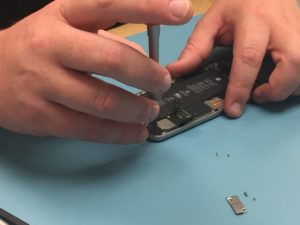
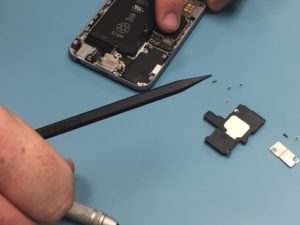
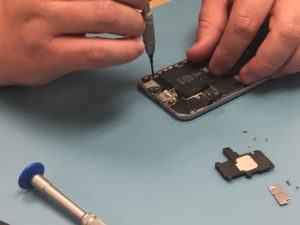
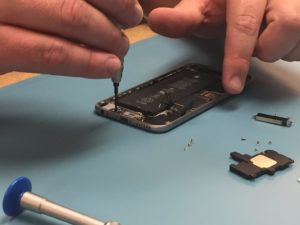
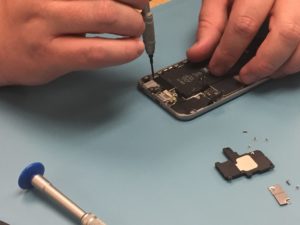
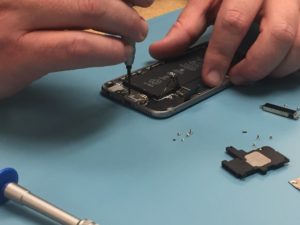
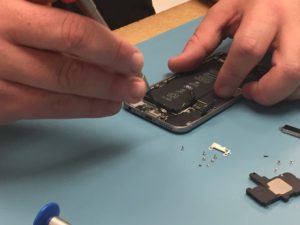
iPhone 6 Lightning Port Replacement: How To

iPhone 6 lightning port repair is a moderately difficult DIY repair. In other words, some smartphone repair experience
helps. However, a patient hand can complete the repair successfully with these instructions. Above all, have fun. Let’s
get to it!

Tools Needed

Recommended: Magnetic mat [BUY NOW], screw capsules [BUY NOW]

Parts Needed:

General Repair Guidelines:

  • Always use good lighting – smart device components
    are small and you’ll need plenty of light to see what you are doing.
  • Maintain a clean, organized workspace so you don’t
    lose or confuse any components.

Introduction

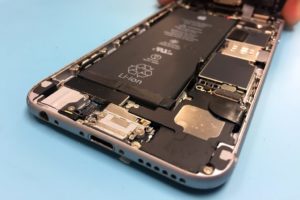
Lightning port for the iPhone 6 is relatively easy, but it is buried under several components that must be removed in
sequence. This is an important repair because the lightning port component also holds the headphone jack and
microphone. The clasps holding the screen onto the body near the top are at an angle. The flex cable for the screen is
also towards the top. Keep track of your screws as there are quite a few different ones. Let’s do this.

iPhone 6 Lightning Port Removal Steps

Remove the Screen

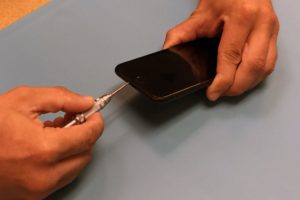
  1. After that, unscrew the two pentalobe screws on either side of the lightning dock on the bottom edge of the iPhone 6.
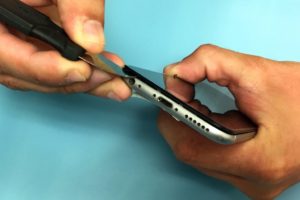
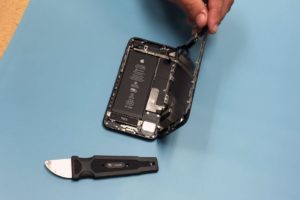
  1. Use the metal spudger to slowly and carefully separate the glass screen of the iPhone from the body. Start on
    the bottom edge of the device and proceed slowly. The flex cable for the screen is at the top.
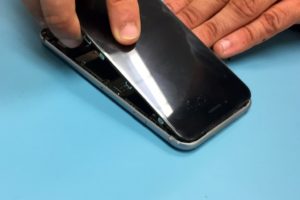
  2. Slowly pull the top of the screen away from the body and locate the EMI (electromagnetic interference) shield located by the bottom right of the battery.
  3. Unscrew the two screws securing the EMI shield to the logic board and remove it.
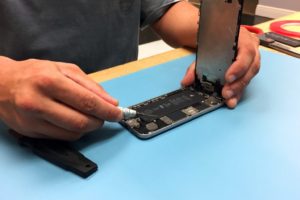
  4. Using a spudger, disconnect the battery cable from the logic board.

Remove Loudspeaker, Vibrator

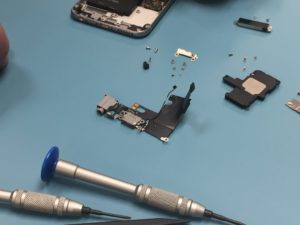
  1. Right next to the lightning port connection there is a small black circle connected by a gold contact to a
    black wire. This is the antenna and it should be disconnected using the spudger.
  2. In the bottom right of the iPhone 6, the loudspeaker sits. It is a larger black component held in place by Four
    Phillips head screws hold it in place. It should be removed next. Unscrew the four screws and gently pry it
    out, using caution to not catch the antenna while you are pulling it out.
  3. After that, we will remove the vibrator, a black rectangle. It runs horizontally under the battery, on the bottom left of the phone. Two Phillips head screws hold it in place.

Remove Microphone Brace, Unscrew Lightning Port

  1. Remove the small black plastic brace that holds the microphone in place between the lightning port and the
    headphone jack.
  2. After that, remove the two screws on the top edge of the headphone jack component, the light grey square in the
    bottom left of your iPhone (above the headphone jack hole).
  3. Next, unscrew the six screws on the sides of the lightning port. They sit symmetrically, three on each side.
  4. You have now completed detaching the lightning port assembly. After that, it can be removed from the housing.
    However, if the microphone sticks, gently pry it with your spudger.
  5. Voila! You completed the mission. Work through
    the steps in reverse to install a new lightning port.

For Help, Repairs, or Parts

In conclusion, if you need parts or tools for this repair, or if this repair is too much to attempt on your own and you
need professional help with your iPhone 6 repair,
contact iFixYouri at 888-494-4349or www.ifixyouri.com.

iPhone 7 Screen Repair: How To Do It Yourself

iPhone 7 screen repair can be accomplished smoothly if you take your time and have the correct tools and equipment.

Tools Needed:

Recommended: Magnetic Mat [BUY NOW],
Screw Capsules [BUY NOW]

Parts Needed:

General Repair Guidelines:

  • Always use good lighting. Smart device components, for instance, are small. You’ll need plenty of light to see
    what you are doing.
  • Maintain a clean,
    organized workspace
    . This prevents losing or confusing any components.
  • Group your screws so you can keep track of where they came from. Most screws cannot be interchanged.
  • Apply enough heat to loosen adhesive. However, take care not to overdo it and damage the device.
  • At any point, if the adhesive becomes hard to separate, apply more heat.
  • After separating adhesive, keep the housing and screen in close proximity until flex cable is disconnected.

Introduction

iPhone 7 screen repair is moderate in difficulty. Several flex cables can be torn easily. Above all, use caution. For
instance, loosening the adhesive that keeps the screen sealed to the body requires properly heating them with a
dehydrator or heat gun. Let’s get to it!

iPhone 7 Screen Repair Step by Step

Before beginning, heat up the device’s interior adhesive strips with a dehydrator, heat gun, or heat mat. Heat guns are
the quickest. However, use caution. It can be easy to overdo it and damage the device.

Open the iPhone 7

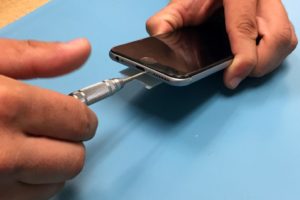
  1. Unscrew the two pentalobe screws on the bottom edge of the phone on either side of the lightning port.
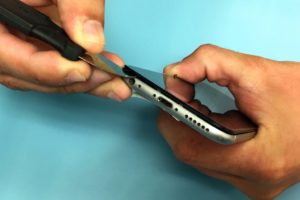
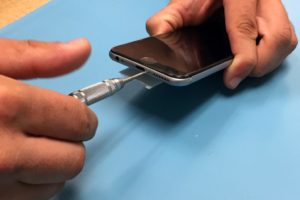
  2. Use the metal spudger to slowly and carefully separate the screen of the iPhone from the body. Start on the bottom
    edge of the device and proceed slowly.
  3. Continue using the metal spudger or use playing cards or guitar picks to gently separate the adhesive up the sides
    and top. Don’t push too deeply towards the center of the device.
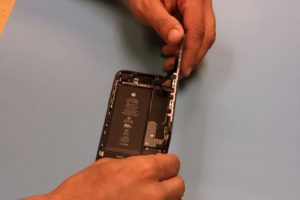
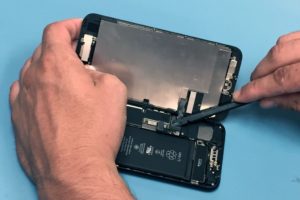
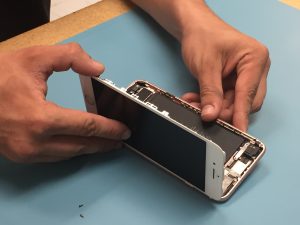
  4. The left side of the screen will open off the body; like a book opened from the back cover. The flex cable
    connecting the screen to the battery will still be attached so open it carefully.

Disconnect the Cables

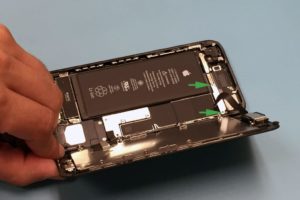
  1. A silver EMI shield on the mid-right side of the phone needs to be removed. It is held in place by four tri-point
    screws.
  2. After removing the shield, use a spudger to disconnect the battery from the logic board.
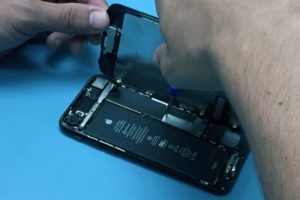
  3. Use the spudger to disconnect the display connector flex cable.
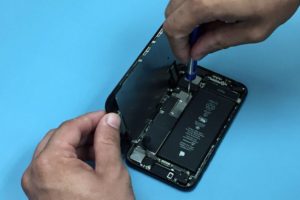
  4. Remove the two Philips head screws on the shield over the front panel sensor assembly connector. It is the silver
    shield near the top of the phone with the flex cable coming out of the bottom.
  5. With your spudger, disconnect the black front panel sensor assembly connector cable from the logic board. It is
    the one that connects the screen to the body.
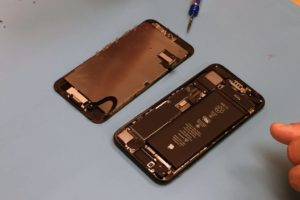
  6. You can now remove the LCD assembly of the iPhone 7 from the body.

Remove the Front Camera and Earpiece

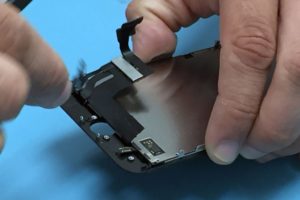
  1. Next, we will remove the three Phillips head screws that hold the silver earpiece bracket on the top of the LCD
    assembly.
  2. Pull the front camera up and out of the way with your spudger or tweezers. Remove the two Phillips head screws
    attached to the earpiece speaker. You can now also remove the earpiece speaker.
  3. Use your spudger to remove the ambient light sensor and proximity sensor. This is a thin cable that is easy to
    tear so use caution.

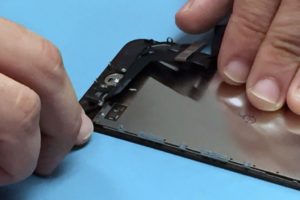
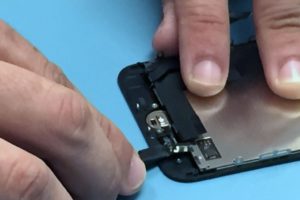
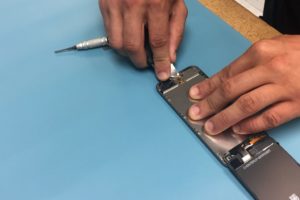
Remove the Touch ID/Home Button

NOTE: The touch ID must be removed carefully. Failing to remove it safely or breaking it will require visiting
an Apple store.
The touch ID must be removed carefully. Failing to remove it safely or breaking it will
require visiting an
Apple store.

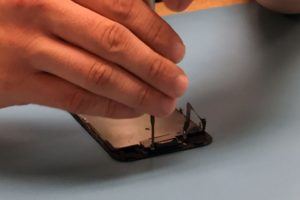
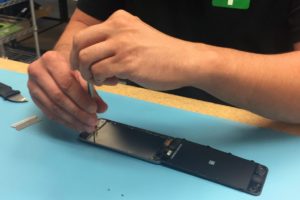
  1. Remove the four pentalobe screws holding the touch ID/home button bracket.
  2. Work your way around the side brackets on the both sides of the assembly, unscrewing all 6 tri-point screws.
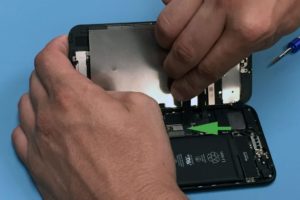
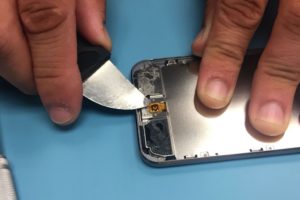
  3. Peel the large LCD shield away, starting from the top.
  4. Use your spudger to disconnect the home button cable connector.
  5. Disconnect the underlying connection with caution.
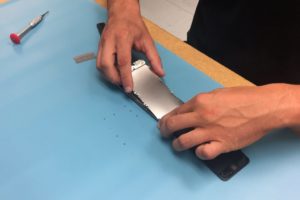
  6. Pry the adhesive holding the touch ID/home button to the back of the digitizer.
  7. The home button is now unattached and can be removed but pushing it forward through the front of the screen.

For Help, Repairs, or Parts

For iPhone 7 Replacement Parts, or if iPhone 7 screen repair
is too much to attempt on your own and you need a repair professional skilled at iPhone
7 Repair
,
contact iFixYouri at 888-494-4349 or www.ifixyouri.com.

How To: iPad Air 2 LCD Removal

Introduction

iPad Air 2 LCD removal is relatively easy to perform if you have some repair experience. Replacing requires transferring the home button, which is moderately difficult. The iPad Air 2 was a solid performer in its hey-day and still holds good value.

Proper attention should be given to safely loosening the adhesive strips with heat. Keep an eye out for the flex cable. So let’s get to it! Text directions are located below the video.

Tools Needed:

  • Metal Spudger [BUY]
  • Phillips Head Screwdriver #000 [BUY]
  • Spudger [BUY]
  • Guitar Pick
  • Dehydrator, Heat gun, or Heat mat

Recommended: Magnetic mat [BUY], screw capsules [BUY]

General Repair Guidelines:

  • Always use good lighting – smart device components are small and you’ll need plenty of light to see what you are doing.
  • Maintain a clean, organized workspace so you don’t lose or confuse any components.
  • Apply enough heat to loosen adhesive but not enough to damage the device.
  • At any point during a repair, if the adhesive becomes hard to separate, apply more heat.
  • After separating adhesive, keep the housing and screen in close proximity until flex cable is disconnected.

iPad Air 2 LCD Removal Steps

Click an image to enlarge

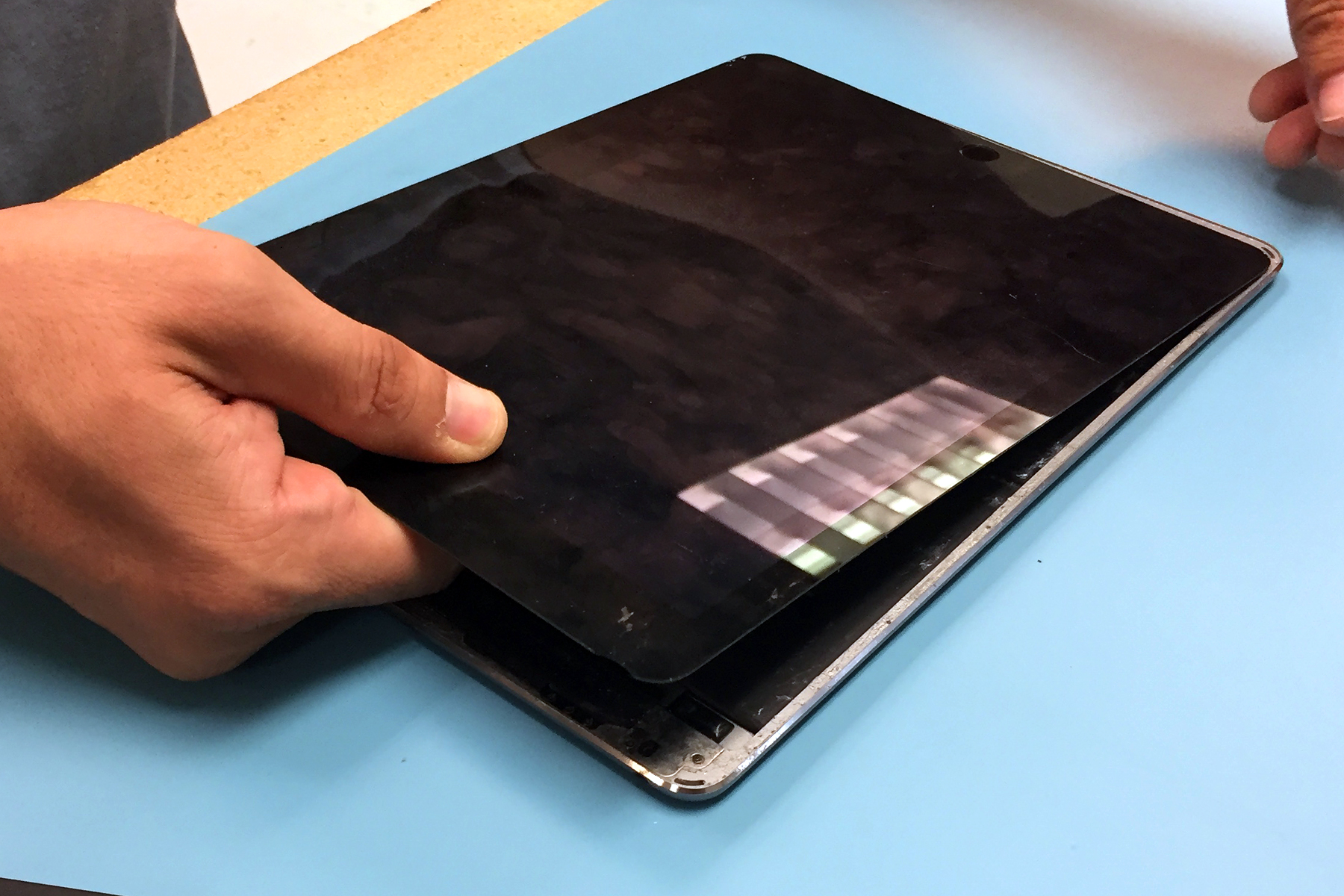
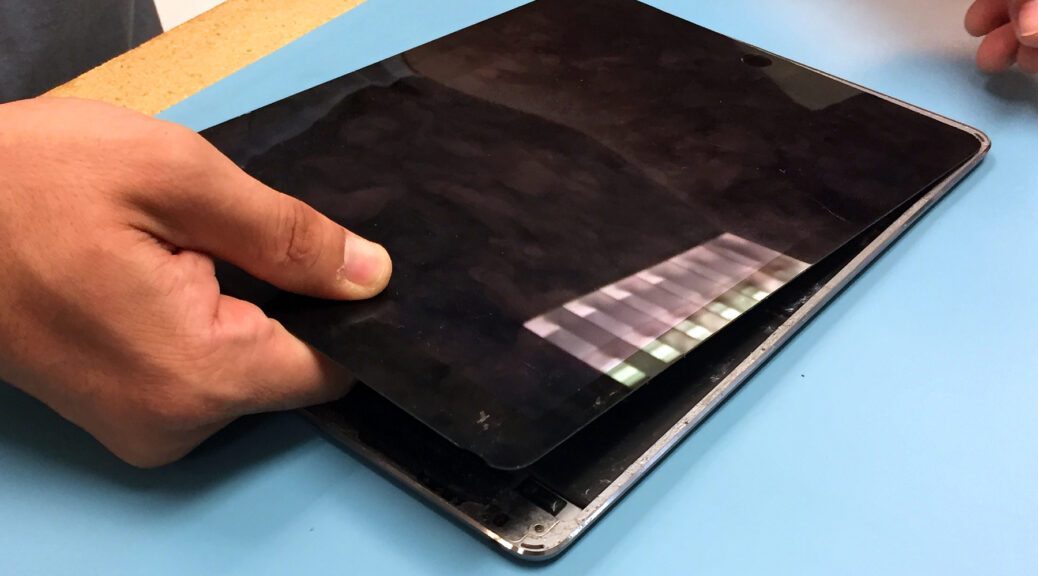
Heat up the device’s interior adhesive strips with a dehydrator, heat gun, or heat mat. Heat guns are the quickest, but use caution as it can be easy to overdo it and damage the device. Use the metal spudger to slowly and carefully separate the screen of the iPad from the body. Start on the bottom edge of the device and proceed slowly.

iPad Air 2 LCD Removal Step 1 iPad Air 2 LCD Removal Step 1b

Continue using the metal spudger or use playing cards or guitar picks to gently separate the adhesive up the sides and top. Don’t push too deeply towards the center of the device.

iPad Air 2 LCD Removal Step 2 iPad Air 2 LCD Removal Step 3

The screen is connected via flex cable, so do not pull the LCD far from the body. Unscrew the screw connecting the battery to the logic board.

iPad Air 2 LCD Removal Step 4 iPad Air 2 LCD Removal Step 5

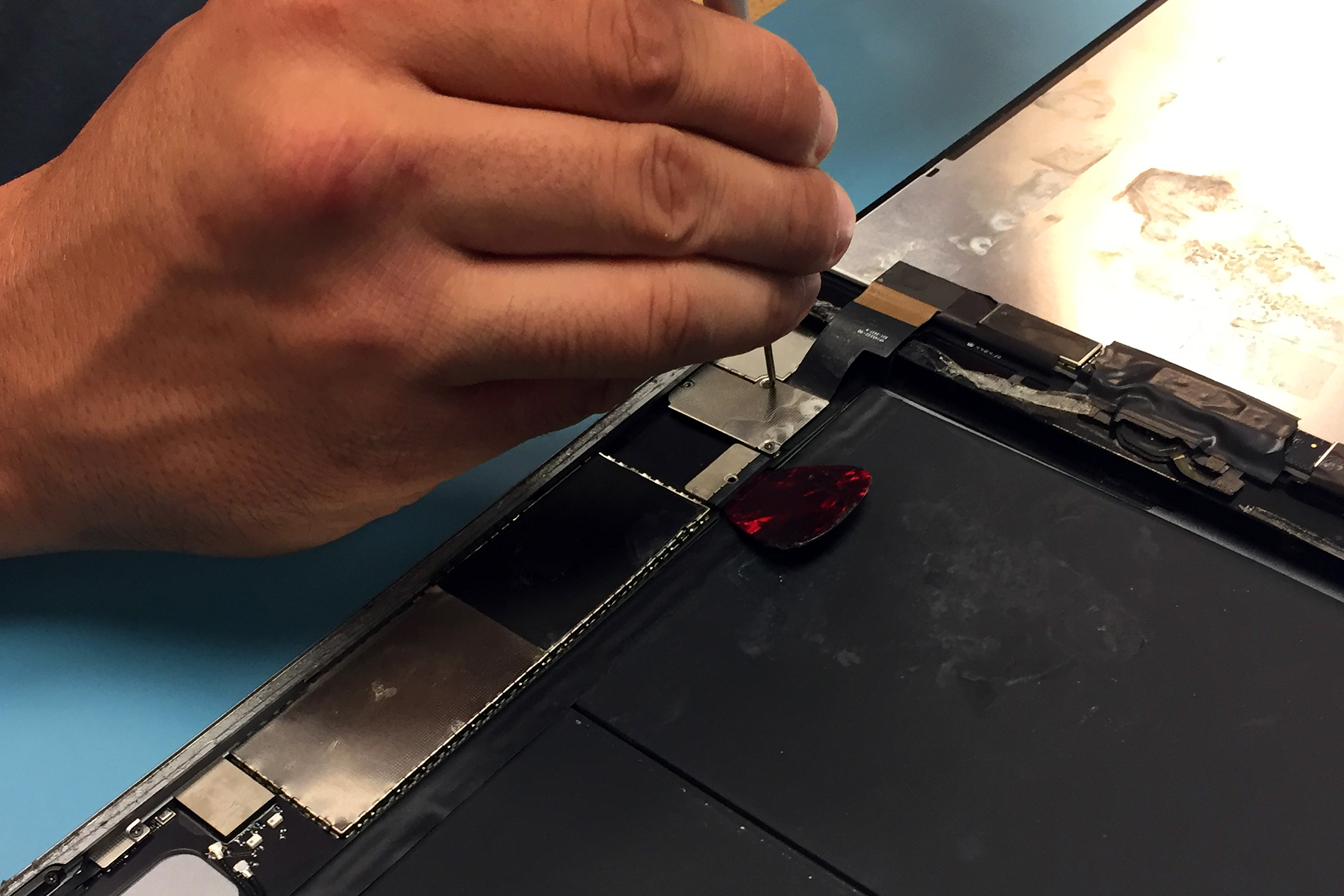
Slide a guitar pick between the connection to ensure no power travels from battery to logic board during repair.iPad Air 2 LCD Removal Step 6

Unscrew the screws holding the shield over the flex cable connections.iPad Air 2 LCD Removal Step 7

Disconnect the two flex cables connecting the LCD panel and the logic board.

iPad Air 2 LCD Removal Step 8 iPad Air 2 LCD Removal Step 9

Voila! You have removed the LCD assembly of the iPad Air 2. If you have a replacement LCD, just work through the steps in reverse. You will need to switch over the home button for touch ID functionality, which is considerably more challenging.iPad Air 2 LCD Removal Step 10

For Help, Repairs, or Parts

If you need parts or tools for this repair, or if this repair is too much to attempt on your own and you need a repair professional skilled at iPad Air 2 repair, contact iFixYouri at 888-494-4349 or www.ifixyouri.com.

iPhone 6 Battery Replacement: How To Guide

Introduction

iPhone 6 Battery replacement is relatively easy. The clasps holding the screen onto the body near the top are at an
angle. The flex cable for the screen is also towards the top but you will not need to disconnect it to replace the
battery.

There are two strips of white adhesive under the battery that are a nuisance to remove but it is much harder to try to
pry the battery out without doing so. Let’s do this.

Exercise caution when working with batteries, especially swollen
ones
.

Tools Needed

  • Metal Spudger [BUY]
  • Pentalobe Screwdriver #000 [BUY]
  • Spudger [BUY]
  • Tweezers [BUY]
  • Tape [BUY]

Recommended: Magnetic mat [BUY],
screw capsules [BUY]

Parts Needed

iPhone 6 Replacement Battery [BUY]

General Repair Guidelines:

  • Always use good lighting – smart device components are small and you’ll need plenty of light to see what you
    are doing.
  • Maintain a clean, organized workspace so you don’t lose or confuse any components.
  • After separation, keep the back housing and screen in close proximity until all flex cables or other wire
    cables are disconnected.

iPhone 6 Battery Removal Steps

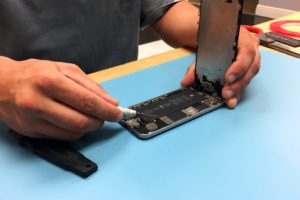
  1. Unscrew the two pentalobe screws on either side of the lightning dock on the bottom edge of the iPhone 6.

2. Use the metal spudger to slowly and carefully separate the glass screen of the iPhone from the body. Start on
the bottom edge of the device and proceed slowly. The flex cable for the screen is at the top.

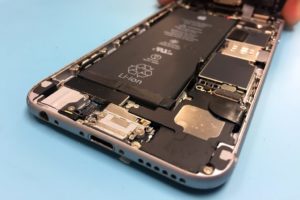
3. Slowly pull the top of the screen away from the body and locate the EMI (electro magnetic interference) shield
located by the bottom right of the battery.

  1. Unscrew the two screws securing the EMI shield to the logic board and remove it.

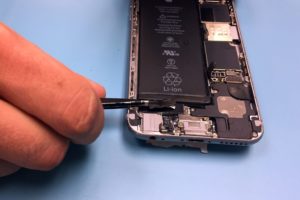
  1. Using a spudger, disconnect the battery cable from the logic board.

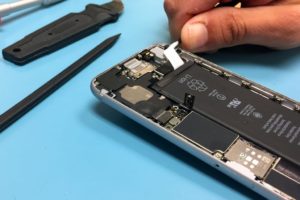
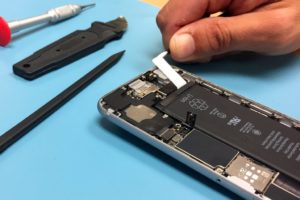
  1. The next steps involve removing the adhesive tape underneath the battery to make it easier to remove. Slide one
    tip of your tweezers under the black adhesive strip at the bottom of the battery. Each black strip runs halfway
    across the bottom of the battery.

  2. Now roll your tweezers away from the battery while simultaneously pulling the tape out from underneath the
    battery.

  3. Continue to pull the tape out from underneath the battery and roll it around the tweezers. It may help to pull
    diagonally out from the corner as the tape runs up the full height of the battery.

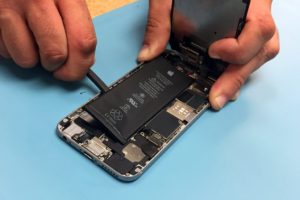
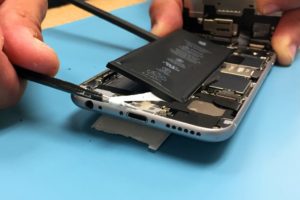
  4. If the white tape snaps apart you may need to use a spudger to carefully pry the battery up. Continue using a
    combination of tweezers and the spudger to separate the battery from the body of the iPhone. You will have to
    repeat the process to remove the second strip of tape.

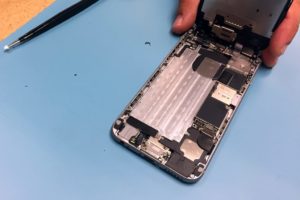
  5. Now you can remove the battery. Use a small length of some adhesive tape to secure the new battery in place.
    Reconnect the battery cable to the motherboard and screw the EMI shield back on.

  1. Reattach the screen by angling the top in first and then clicking the side clasps into place. Replace the two
    screws by the lightning dock. That’s it! You’re done.

For iPhone 6 Battery Help, Repairs, or Parts

If you need parts or tools for this repair, or if this repair is too much to attempt on your own and you need
professional help with your iPhone 6 repair,
contact iFixYouri at 888-494-4349or www.ifixyouri.com.

iPod Touch 5th Gen Battery Replacement: How To

Introduction

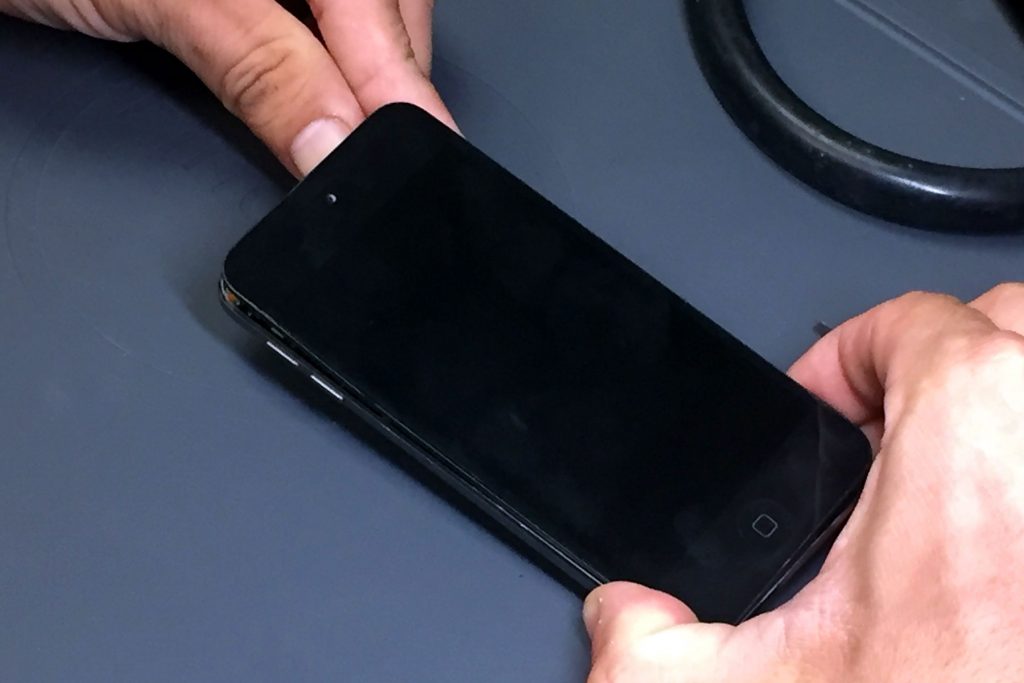
iPod Touch 5th gen battery replacement is moderately difficult. The eight clasps holding the screen onto the body will make snap noises when they are unclasped. Don’t immediately pull the screen from the body as you will probably tear the cable to the home button. Step by step instructions are below the video.

Tools Needed

  • Razor Blade
  • Metal Spudger [BUY]
  • Phillips Head Screwdriver #000 [BUY]
  • Hot Air Rework Station
  • Spudger [BUY]
  • Soldering Station
  • Flux

Recommended: Magnetic mat [BUY], screw capsules [BUY]

General Repair Guidelines:

  • Always use good lighting – smart device components are small and you’ll need plenty of light to see what you
    are doing.
  • Maintain a clean, organized workspace so you don’t lose or confuse any components.
  • Apply enough heat to loosen adhesive but not enough to damage the device.
  • After separation, keep the back housing and screen in close proximity until all flex cables or other wire
    cables are disconnected.

iPod Touch 5th Gen Battery Replacement Steps

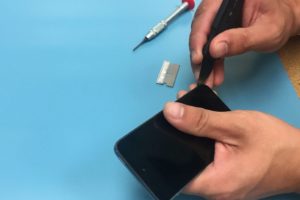
  1. Starting at the bottom near the home button, slide the corner of a razor blade in between the screen and the
    bottom frame to begin separating the screen from the body.
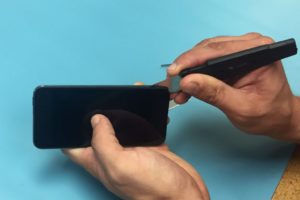
  2. Use the metal spudger to slowly and carefully separate the glass screen of the iPod from the body. Start on the
    bottom edge of the device and proceed slowly. Eight brackets connect the screen to the body.

  3. Continue using the metal spudger to gently separate the glass from the body up the sides and across the top. Don’t
    push too deeply towards the center of the device. When all the brackets have been pryed open, slowly pull the
    top of the screen away from the body.
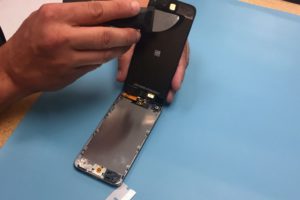
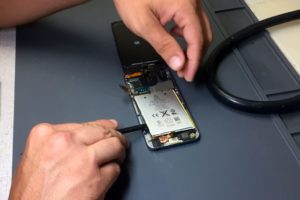
  4. The home button is connected via an orange flex cable, so do not pull the back glass far from the frame.
    Disconnect the cable from the heat shield of the iPod.

  5. After disconnecting the home button flex cable, remove the eight screws from the silver heat shield and set to
    the side.

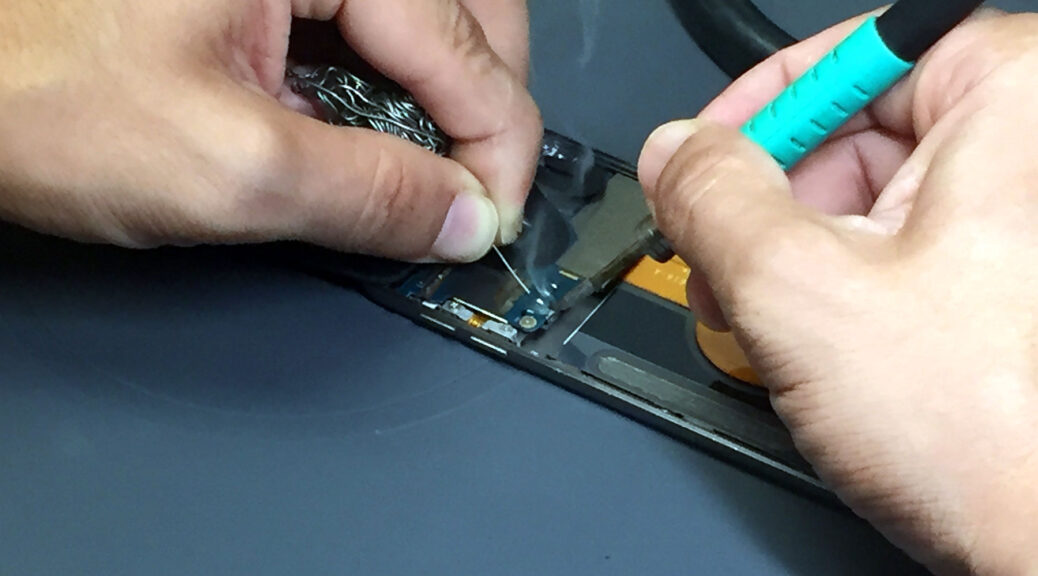
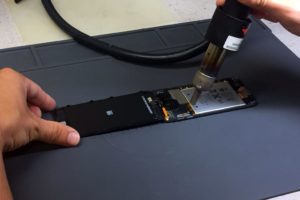
  6. The next steps involve removing the battery flex cable using a hot air rework station. Focus the heat on the
    black film and Kapton tape that needs to be removed while heating. This is located on the left side just above
    the battery.
  7. Once the cable can be removed, pop out the battery with a spudger.
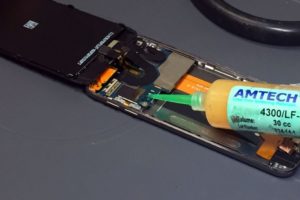
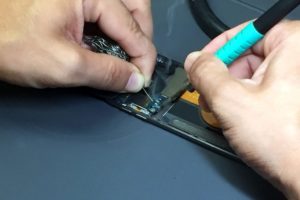
  8. The replacement battery must be soldered into place using a soldering iron, flux, and tweezers to hold the
    cable in place.
  9. With your new replacement battery connected, you should now be able to boot up the device. You can work
    backward from step 7 to complete the repair. Be sure to cover the new solder points with Kapton tape before
    reinstalling the heat shield. If Kapton tape is not added the heat shield could short out the device.

For Help, Repairs, or Parts

If you need parts or tools for this repair, or if this repair is too much to attempt on your own and you need
professional help with your iPod Touch Repair, contact iFixYouri at 888-494-4349 or www.ifixyouri.com.

Galaxy S8 Screen Teardown: How To

Introduction

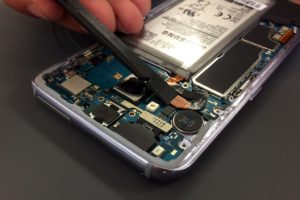
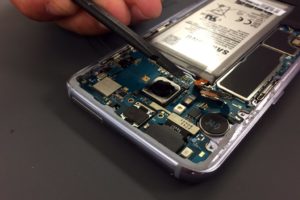
The Samsung Galaxy S8 screen is moderately difficult to tear-down. Proper attention should be given to safely loosening the adhesive strips with heat. Keep an eye out for the connector cable to the fingerprint sensor on the back panel, and the screen flex cable which feeds through an opening in the body. So let’s get to it! Look for the text directions below the video. Check out iFixYouri on youtube for more repair videos.

Tools Needed:

Recommended: Magnetic mat, screw capsules

General Repair Guidelines:

  • Always use good lighting – smart device components are small and you’ll need plenty of light to see what you are doing.
  • Maintain a clean, organized workspace so you don’t lose or confuse any components.
  • Apply enough heat to loosen adhesive but not enough to damage the device.
  • At any point during a repair, if the adhesive becomes hard to separate, apply more heat.
  • After separating adhesive, keep the back panel, housing, and screen in close proximity until you disconnect all flex cables or other wire cables.

Samsung Galaxy S8 Teardown Steps

Click an image to enlarge

Heat up the device’s interior adhesive strips with a dehydrator, heat gun, or heat mat. Heat guns provide a quick solution but use caution as it can be easy to overdo it and damage the device.

Use the metal spudger to slowly and carefully separate the back panel of the phone from the body. Start on the bottom edge of the device and proceed slowly.

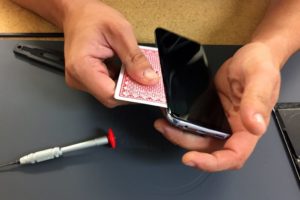
Continue using the metal spudger or use playing cards or guitar picks to gently separate the adhesive up the sides and top. Above all, don’t push too deeply towards the center of the device.

Disconnect the Sensor Cable

The rear fingerprint sensor connects to other components via an orange cable, so do not pull the back glass far from the frame. The cable can be disconnected from the back panel with a spudger.

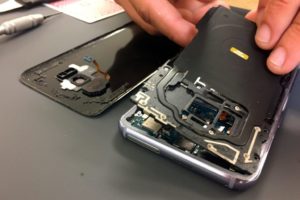
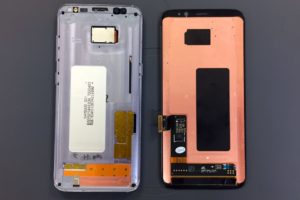
Now you’ve disconnected the fingerprint sensor cable and separated the adhesive on all edges. After that, the back panel can be removed and set to the side.

Unscrew visible screw heads starting from the top. These connect the wireless charging assembly to the body. The three screws along the bottom do not require removal.

Galaxy S8 Screen removal step 5

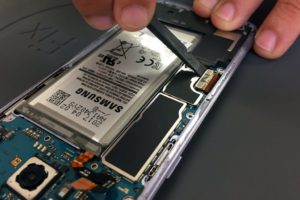
Set aside the wireless charging assembly. Using the spudger, disconnect the battery’s orange-colored flex cable which is connected to the logic board.

The screen connects to the board by an orange flex cable located near the edge of the phone. Disconnect it using a spudger.

Separating the Galaxy S8 Screen Adhesive

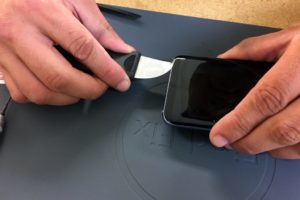
Removal of the Galaxy S8 screen may require reheating the adhesive. Slide the metal spudger between the screen and body. Gently slide along the bottom of the device, separating the adhesive.  WARNING: Be careful not to damage the flex cable on the right side of the phone. Do not pry too deeply into the device on the bottom or right side.

A plastic card can be used to separate the adhesive on the sides and top of the phone. However, you will have to angle the card to slide up the sides of the phone because of the glass curvature.

Watch that Flex Cable!

The screen’s flex cable feeds through a hole in the right side of the body (if you are looking at the screen). Take care when pulling the screen away from the body because there can be complications from rushing. For instance, the flex cable can get caught on the edge of the opening.

That’s it! You’ve removed the Samsung Galaxy S8 screen assembly. In conclusion, we hope you’ve learned something and had fun. You can do the removal steps in reverse if you are attempting to install a new screen assembly.

For Help, Repairs, or Parts

If you need parts or tools for this repair, or if this repair is too much to attempt on your own and you need a repair professional skilled at Samsung Galaxy S8 repair, contact iFixYouri at 888-494-4349 or www.ifixyouri.com.