#madebygoogle News: Pixel Phone, Virtual Reality, and More!

So it’s finally October 4th! The long-awaited #madebygoogle summit is today, and iFixYouri finally received all of the news that Google said we’ll be talking about for the next 8 years. Will we, though? Is 8 months more accurate? Or 8 decades? It’s tough to decide, since the Google Pixel got leaked yesterday (oops) and we had to pretend to be surprised. Let’s go over what happened in the two-hour long presentation.

Things started out light, with a short clip featuring Bertram and Dinesh from Silicon Valley. Bertram says he’s been getting Google products in beta tests and also an invite to a wild afterparty with Sergey Brin and Larry Page. Dinesh is jealous and so are we.

google1

Sundar Pichai comes out to deliver the keynote, just past his one-year anniversary as CEO of Google. He gives a brief history of the connectivity…

google2

…and states Google’s goal (of this press conference, at least): an “AI-first world.” Pichai talks about Google Assistant, which we covered in our article on Google Allo, and how it’ll work as an interface to your own “personal Google.” Security was mentioned, with personal information staying on your device, and given some interesting examples of use. We liked the idea of having it remember the combination to your bicycle lock; just say “Remember my bicycle lock combination” and recite it, Assistant does the rest. Simple, but cool.

google3

Pichai also mentioned Google’s database of 70 billion facts on human interaction and how they’re using it, from advances in their translation program (something called neural machine software giving more realistic translations) to text-to-speech software giving context and emotion to responses. Also, their machine-learning tools can finally determine what bears are doing in photos.

google4

It sounds silly, but identifying rocks in a photo (essentially gray-brown blobs) is a huge step. Rick Osterloh, former president of Motorola and Google’s hardware chief, stepped up next, and could barely contain his excitement.

google5

After a brief talk about keeping up with the demands people have for their personal tech (including a great line: it should “just work for you”), he unveils the Google Pixel, their latest contender in the smartphone market, and brings Product VP Brian Rakowski up to demo it.

google6

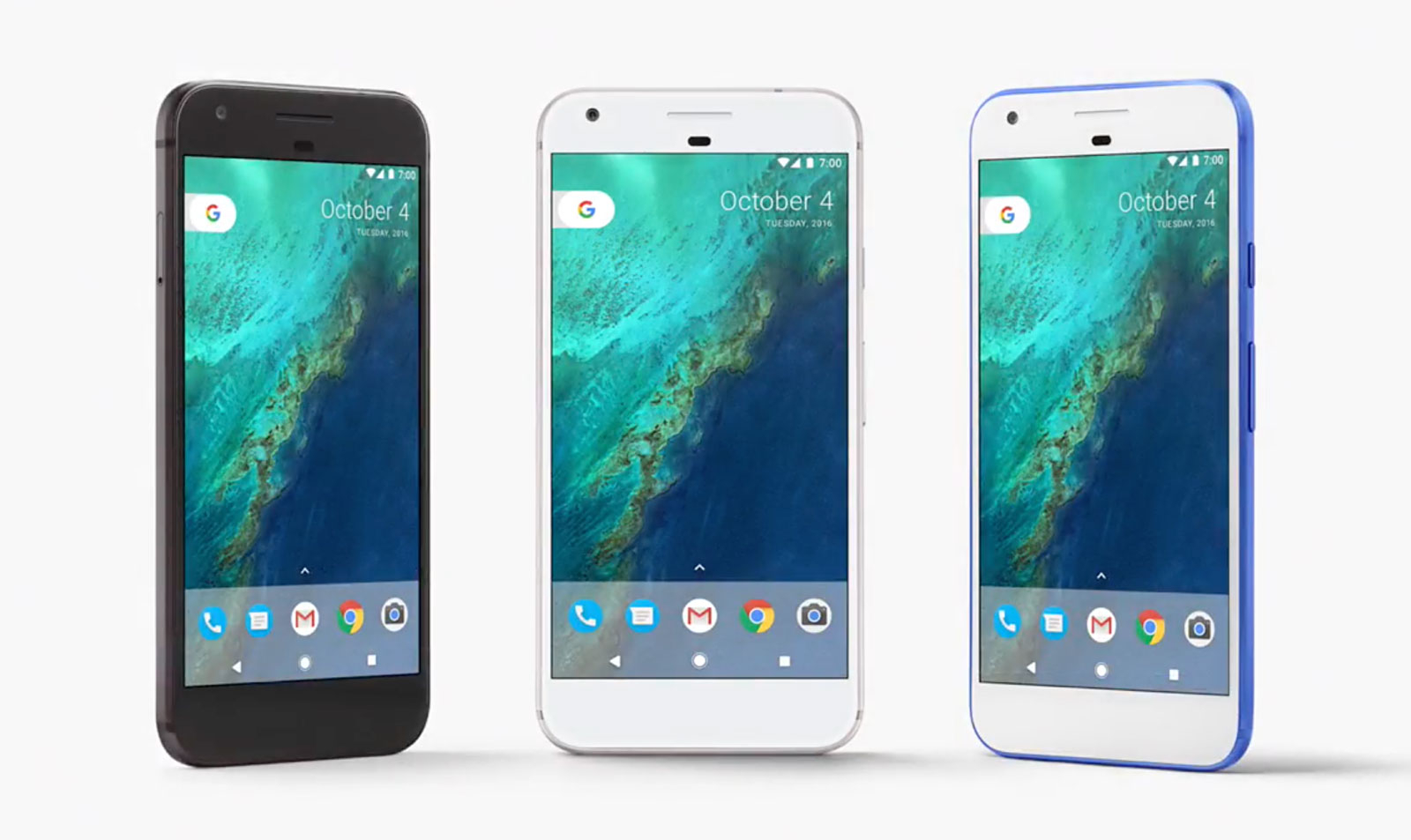
Pixel is a very attractive smartphone, with a polished aluminum body and a half-glass back where the fingerprint sensor lies. Colors include…erm…Quite Black, Very Silver, and the stunning Really Blue. Its operating system is Android but sleek, similar to Chrome OS, and designed around Assistant. The most important feature of this integration is that Assistant is great at reading contextual clues. Long-pressing the home button brings up Assistant, and swiping up shows you information related to what you’re currently looking at. Or if a friend texts you asking if you want to visit her in New York, you can just bring up Assistant and ask “How much are flights?” and you’ll get a quick list showing you travel options to JFK or LaGuardia. We’re curious how it will know whether or not to look for context clues, but we’ll just have to wait and see.

google7

Another feature that previously didn’t get any hype is the Pixel’s camera. Citing a rating of 89 by DxOMark.com, the highest of any smartphone camera (the iPhone 7 got an 86), the 12.3MP f/2.0 camera is seriously the best smartphone camera out there. Just take a look.

google9

All that with no camera bump! Other camera features include 4K video, a Smart Burst mode (that takes several photos in quick succession and automatically chooses the best one) and HDR Plus, a high-quality pixel-by-pixel dynamic range setting. Also: zero shutter lag and the shortest capture time of any phone tested. A redesigned stabilization feature uses the Pixel’s internal gyroscope 200 times per second to deliver smooth video without the wobbly effect of digital methods. With a subtle jab to Apple, Brian announced that all Pixels offer unlimited photo and video storage on the cloud, even with 4K video.

google10

And while we’re on the subject of subtlety:

google13

Sabrina Ellis, director of Product Management, came out next to announce some hardware features. Without stating the battery life of the Pixel (which may actually say a lot) she did mention a fast charger, similar to that in newer Samsung Galaxy models, capable of charging 7 hours of battery life in just 15 minutes, hopefully without anything blowing up. The phones will ship with Nougat, the newest Android software version, and new updates will automatically download in the background and kick in at the next restart, taking a cue from Google’s Chromebook laptops.

The devices will also come with a “quick switch adapter” for transferring contacts, messages, photos, etc., from your old phone directly to your new Pixel, no other hardware needed. Any difficulty with all this new? Every Pixel has 24/7 live customer care with a screen-sharing option, making it great for older folks.

google11

Now for some not-so-good news. The only US carrier currently offering the Pixel is Verizon. The phone can also be purchased unlocked, but its price is causing some gripes: $649 for the 5” Pixel and $769 for the 5.5” Pixel XL. Fortunately, a cell-carrier-esque payment plan is available through the Google Store, starting at $29 a month. I will also remind readers that the iPhone 7 was released on the exact same price point.

On to more hardware! The VR team head, Clay Bavor, comes out to discuss the Daydream virtual-reality headset. It’s here we get to see the typical Google outside-the-box innovation: the headset is mostly made of lightweight foam and fabric. Even the viewing box is encased in what seems to be a textured microfiber sweatshirt.

google21

Very odd, but Clay explains that, as the headset is something you wear, it should look like something you’d wear. That actually makes sense! Daydream works similar to Samsung Gear VR or Google’s own Cardboard, in that you need a compatible smartphone (the Pixel, for now, but other manufacturers are working on it) to act as the screen. A small controller, with two buttons, a touchpad, and full gyroscopic detection, hides snugly inside the viewing box when not in use. Extremely low latency (by enabling the VR software to access more processing power when inside the Daydream) increases immersion and reduces motion sickness. More demos followed, including a Harry Potter game, an interactive star chart, and curated StreetView tours, including…uh…SheepView.

google22

Mario Quieroz from Product Management talks about Google WiFi, a revamping of their OnHub devices. It’s simply a modular wifi system; plug one into the Ethernet, and the others act as additional transmitters giving strong, overlapping coverage to the whole house. It also actively manages networks, seamlessly switching routers as a user travels throughout their home to whichever connection is strongest. We think this is very cool, and useful for large households with several devices in each room.

google24

The Chromecast Ultra was also unveiled, featuring faster processing and better picture with 4K support. Mario mentioned that Google Play Movies & TV will get 4K in November.

google23

Rishi Chandra came out next, very likable but also extremely long-winded. His topic is the Google Home device, Google’s competitor to the Amazon Echo.

google25

Google Home, about the size of a Yankee Candle and featuring three powerful speakers, talks to you using the aforementioned Google Assistant, and Rishi went on and on using several examples, not all of them thrilling. “Ok Google, play me that Shakira song from Zootopia” and, lo and behold, Assistant finds it for you and starts playing! More interesting is Assistant’s integration and personalization across all of your devices; tell your Home device to add pasta and tomatoes to your shopping list then, at the grocery store, ask Assistant to show you said shopping list and bam!

google26

When you get home, put your pasta in boiling water and tell Home to set a timer for 11 minutes. Tell it “Good morning” and it gives you info on the weather, your commute, appointments you’ve set, and more while you sip your coffee; Rishi calls this MyDay and compares it to the presidential daily briefing. It seems like the neatest features of Assistant are its most basic, and that’s important for achieving the type of integration into day-to-day life that Google wants.

The last speaker, Scott Huffman, talked about the nerdier side of Assistant and how Google will work with developers to utilize it. A devkit, Google SDK, will be launched to help programmers and companies work with the new software.

After the rudest ending ever to a press release (“I’d like to say thank you, and goodbye to everyone on the livestrea-” followed by a LIVESTREAM HAS CLOSED placard), we think that was a fairly satisfying expo, though not as groundbreaking as Google made it out to be. Of course, we’re excited about the Pixel phone. Google’s current Nexus line of smartphones are of very high quality and extremely well-reviewed. We’ve played around with Assistant and, although we do like to poke fun, it is groundbreaking and it’s easy to agree with Rick Osterloh about AI being the link between software and hardware. Google WiFi isn’t breaking new ground but it’s a great, affordable solution (better than purchasing routers separately and linking them together manually) to a common issue. The potential success of Google Home is up in the air if the dozens of people who bought an Amazon Echo are any indicator (we kid, we kid). I guess we’ll find out in 8 years. Ok Google, set a reminder for October 4, 2024.

Our technicians are already doing their homework and eagerly anticipating the first Pixel test devices, so go ahead and order one if you’re interested; if anything breaks, you can send it to iFixYouri and we’ll get it back to you good as new.

Chat Securely with Google Allo, Face-to-Face with Duo, or…Not

If you have your ear to the ground, tech-wise, you might have heard of Allo, Google’s new messaging application for Android and iOS. No, it’s not a rebranded Hangouts. The two apps will exist independently alongside Duo, a video messaging app released in August. A lot of users are already stumped. Why need three apps when one (the most established) already does what the other two do? We’ll break it down for you.allo screenshot


The main purpose of Allo is one-on-one messaging, although group messaging is supported. It has a pleasantly simple layout and, way more importantly, optional end-to-end encryption. This “Incognito Mode” also features expiring chats (with settings ranging from 5 seconds to one week) and private notifications, meaning non-rich (displaying on your lock screen only that you have received a message). It has a real “secret agent” feel to it, and is obviously intended to steal some of the secure-messaging market share from BlackBerry. There has been some criticism from security experts, including one Mr. Snowden, regarding Allo’s encryption feature not being activated by default and requiring a special “mode” to be entered. More fun, less useful features include changes in text size (by long-pressing the send button until a small slider bar appears) and the ability to send a tiny Google Map with a dropped pin on your current location. Allo also has an odd “Smart Reply” feature that utilizes Google’s impressive machine learning algorithms to predict responses for you, depending on context and your previous replies. One example even showed Smart Reply suggesting responses to a received photo, allowing you to easily pretend to care about your friend’s child doing something mildly interesting. However, until Smart Reply gets to know you, the suggested replies are rather bland. Here’s a thrilling snippet of conversation between my editor and I using only suggested responses.


Allo’s main intention seems to be to show off a preview of the new Google Assistant, before it appears in Google Home (Google’s response to Amazon Echo) and future Android Wear smartwatches. It’s an expansion of Google Now, the system of “cards” showing information Google thinks you’ll be interested in combined with voice search. Assistant expands on that through Allo, turning the process into a two-way conversation (versus the prior “Let Me Google That For You” method) and…Assistant is pretty darn good at talking. Telling Assistant “I want to go to Boston” brings up landmarks in Boston along with suggestions to look up flights, hotels, and more. Complaining “I’m hungry!” shows you restaurants in the area along with ratings; a quick tap opens up Maps and drop a pin. You’ll also be asked what you’re in the mood for, and this information is saved for the future as the app gets to know you. Assistant, along with competitors Siri and Cortana, has a long way to go before being a true personal assistant (I tried getting it to book me a flight, to no avail) but it’s a step in the right direction for Google. This kind of competition is healthy and will push the three companies into making some serious breakthroughs in the future.


Duo is simply a spinoff of the Hangouts video chat, again using a streamlined layout. Android users have the “Knock Knock” feature, which shows the recipient the video feed of the caller before they pick up. Google says this is to “make calls feel more like an invitation rather than an interruption” but also means that you better get your finger out of your nose before you press the Call button (the feature can also be switched off). Duo streams video in HD 720p but also optimized depending on connection, and is able to seamlessly switch between WiFi and mobile data.


The most important thing about these new applications is that nothing is changed for those who don’t want it. This spinning-off isn’t like Facebook forcing you to download its Messenger app. Hangouts is still around and still feature-rich, but Allo is designed just for those who wish to text chat one-on-one (securely, if needed) or in small groups, and Duo for one-on-one video chat. The main focus of Hangouts will remain cross-platform functionality (being able to talk via a laptop or a cell phone), group chat and video chat, and free voice calling. Users are free to download one or all three and use them how they wish, and facilitates the sort of custom user experience Google is trying to expound through its Android platform.

Google Turns 18

GOOGLE IS LEGAL


Balloons and ribbons all around the Googleplex today as the California-based über-company celebrates its 18th birthday. “My oh my, you’ve grown!,” one might say, and one would be quite correct. Starting out as a search engine by two college students, Larry Page and Sergey Brin, Google has become THE search engine, the archetype of which all other search functions are compared to. Along the way, it’s grown, mutated, been renamed (Alphabet), and absorbed everything in sight like a crazed tech amoeba (the most ridiculous statistic is that Alphabet has acquired, on average, more than one new company per week since 2010). In addition to being the top search engine, Google owns and operates the largest email provider (Gmail), web browser (Chrome), and map service while quietly collecting data from its 24 petabytes (24 million GB) of daily user-generated requests. While most 18-year-olds are up to no good, Google stands by its “Don’t be evil” motto and promises to only use the data to help its applications to understand their users.


Of course, Google’s ambitious policy tends to skew along the lines of determining the stickiness of a nearby wall, and after several attempts they now exist in both worlds: the virtual and the physical. Its cellphone line Nexus has been growing in popularity, along with Nest home devices. Some of their experiments seemed to be little more than publicity stunts (we might just be jealous that we weren’t picked for the Google Glass beta) but some show promise. Google Fiber has been providing affordable high-speed internet to cities and metros across the US, while Translate can now utilize your phone’s camera to translate text in real time. They’re also on the frontlines of developing driverless car technology, with plans to have a finished product on the road by 2020.


There’s been concerns, of course, and recently it seems Google’s troubled teenage years have reared their ugly head. Its constant collection of data has been a sensitive subject in an age where internet privacy is constantly being threatened, but like most teens when caught doing something shady, Google explains that its intentions are pure. It wants to personalize the experience for each user without the user’s effort, and when it works, it’s wonderfully seamless. Who hasn’t been amazed when Google Maps remembers where their car is parked? And if you’re going to have to look at advertisements, why not look at ads for products that are relevant to you? But if you’re not into the idea of letting Google read your mind and run your life, it will even let you Google (it’s a verb!) methods for avoiding its ever-present gaze. And that search will be pleasant, fast, and relevant. It still does best what it was originally intended to do: gently take your hand and guide you through the vast internet frontier.


Today, the cell phone war is still raging on. But regardless of what we own, let’s look at how this ubiquitous company has changed the world for all sides, iPhone and Android user alike. Anytime today, if someone sends you a YouTube link to watch, or you use Waze to find the best route through traffic on your Nexus, or use Google Translate to understand a foreign penpal, think of the multicolored company in Mountain View, California, and wish them a happy birthday.
For some quick fun, check out their archive of Google Doodles: that’s the name of the animated, often-interactive banners they use during holidays, both popular and obscure. https://www.google.com/doodles/

Apple Event Recap Notes September 7, 2016

Apple Event September 7, 2016

The Apple Event came and went. iFixYouri watched and listened so you didn’t have to. Here’s a recap of the iPhone and Apple news announced at the event.

iPhone 7 New Features

  1. Apple eliminated the headphone jack which leads to 30 minutes water and dust resistance. IP67 protection standard rated. Sound available via lightning connector-enabled headphones, which are included with iPhone 7 and 7 plus. An adapter will also be included for backward compatibility of older headphones.
  2. Stereo speakers have 2x volume, increased dynamic range.
  3. AirPods wireless earbuds featuring the W1 chip, accelerometers. Voice-controlled features. 5 hrs playback time. Battery built into the case. Available late October for $159.
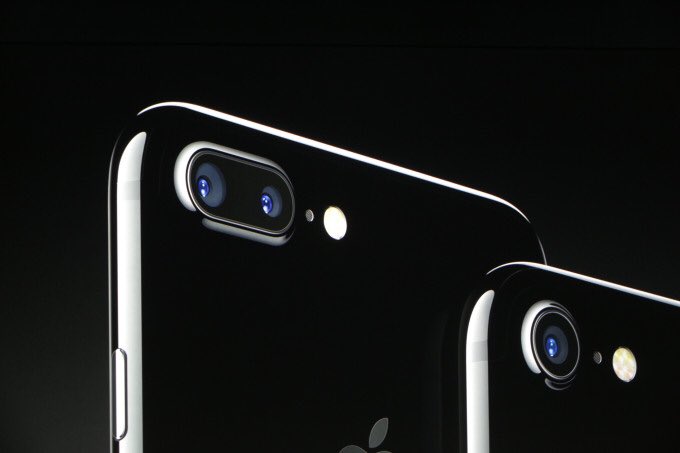
  4. Two new color options: high gloss Jet Black, or black. Still available in gold, silver, and rose gold.
  5. The force-sensitive home button is new (haptic feedback called “Taptic Engine”).
  6. Enhanced picture-taking abilities in iPhone 7: 12MP camera with optical image stabilization. Larger f/1.8 aperture. Six-element lens. 60% faster, 30% more efficient high-speed sensor. Quad-LED True Tone flash with 50% more light, plus a flicker sensor for better artificial light photos. Front camera is 7MP with wide color capture and auto-image stabilization. iPhone 7 Plus has both wide-angle and telephoto lenses which allows 2x optical zoom, and up to 10x digital zoom. Depth effect creates a depth of field look (focused foreground subject with a blurred background).
  7. A10 Fusion chip is 240x faster than the original iPhone chip.
  8. Larger storage options: 32, 128, 256 GB, new storage options will be available in 6s and 6s Plus.
  9. Longest battery life ever in an iPhone. iPhone 7 gets 2 more hours battery life than the 6. iPhone 7 Plus gets 1 more hour battery life than the 6 Plus.
  10. Similar size to iPhone 6 – 4.7″ and 5.5″

iPhone 7 Features

iPhone 7 and 7 Plus Pricing and Availability

  • Pre-orders start September 9
  • Shipments begin September 16
  • iPhone 7 starts at $649
  • iPhone 7 Plus starts at $749

Apple Watch 2nd Gen is swim-proof to 50m, has a 50% faster dual core processor, and 2x faster graphic performance. The display is two times brighter, and the watch now has built-in GPS. White ceramic is a newly available finish. $369. Series 1 is available with dual-core processors for $269. Available for pre-order September 9th.

Super Mario Run! is a Nintendo game coming to Apple iOS. Users can play solo or against other people in Toad Rally mode. Available “holidays 2016”.

Everyone Can Code is a new program to teach children to code using Swift Playgrounds.

Pokemon Go! on your Apple Watch is coming soon. Also, Pokemon Go! Plus allows for more heads-up play.

Sia did a musical performance and it was pretty experimental.

Sia

What did you think of this Apple event? Were you surprised by anything? Which iPhone 7 feature are you most excited about?


iFixYouri Smartphone Repair comes to Kissimmee, Palm Beach Gardens, Jupiter, and Oviedo

We’re growing! New iFixYouri locations are popping up and we’re excited to expand into some new towns and cities. iFixYouri will soon provide professional repair to Kissimmee, Palm Beach Gardens, Jupiter, and Oviedo. Whether you have an iPhone, iPad, iPod, or an Android or Windows tablet or computer, iFixYouri can repair it.

iFixYouri iPhone Repair Kissimmee

iFixYouri Kissimmee

This location is open as of Labor Day Weekend 2016. iFixYouri Kissimmee is east of John Young Parkway on W Osceola Parkway. The nearest cross-street is Greenwald Way. We are in the same shopping center as BJ’s Wholesale, Panda Express, and Taco Bell.

Residents of Kissimmee can bring smartphones, laptops, and computers in for repair. iPhone and iPad repair is our specialty. We offer one-year warranties on all glass replacements, excluding accidental damage. iFixYouri also repairs Android and Windows machines as well.

iFixYouri Kissimmee
1182 W Osceola Parkway
Kissimmee, FL 34741
(407) 201-8694

More InfoMap

iPhone Repair Palm Beach Gardens

iFixYouri Northlake

iFixYouri Northlake is nearing opening date. We have painted walls, flooring, and electricity. The finishing touches are all that remain. This will be our second Palm Beach Gardens retail location. The other is at 2528 PGA Blvd.

This location is on the north side of Northlake, just west of Advance Auto Parts and our Corporate Headquarters. We are across the street from Gardens Towne Square (home of a Publix and Duffy’s Sports Grill). The nearest cross street is Keating Drive. Take I-95 to Northlake and head west.

iFixYouri Northlake
4259 Northlake Blvd
Palm Beach Gardens, FL 33410

More InfoMap

iFixYouri iPhone Repair JupiteriFixYouri Jupiter/Donald Ross

iFixYouri Donald Ross will be our first repair store in Jupiter, FL. The store is on the north side of Donald Ross Road between Military Trail and Central Boulevard in Abacoa Plaza.

Students from nearby Benjamin, Dwyer, and FAU are likely already familiar with this plaza. It houses a Publix, McDonald’s, Subway, Starbucks, and several banks.

Soon, south Jupiter and Abacoa residents will have a nearby option for iPhone, iPad, and iPod repair. iFixYouri repairs all electronic devices.

iFixYouri Jupiter/Donald Ross
5500 Military Trail, Suite 32
Jupiter, FL 33458

More InfoMap

iFixYouri Jupiter/Indiantown

iFixYouri Indiantown will be in the Concourse Village Shopping Center, which also features Ross Dress for Less.

Our technicians can complete many repairs while you wait. You could drop your phone off before you head to Carlin Park or the Juno Beach Pier, and it would be ready by the time you got back from the beach!

iFixYouri Indiantown
75 E Indiantown Rd
Jupiter, FL 33477

More InfoMap

iFixYouri Oviedo

A new shopping plaza is under construction on Mitchell Hammock Road in Oviedo, FL. iFixYouri will be in suite 130, offering smart device repair to the people of Oviedo, and possibly to the city’s chickens as well.

iFixYouri Oviedo
1000 W Mitchell Hammock Rd
Suite 130
Oviedo, FL 32765

More InfoMap

iFixYouri Smartphone Repair Comes to Kissimmee

THIS LOCATION IS NOW CLOSED. PLEASE VISITION OUR LOCATIONS PAGE FOR OTHER NEARBY STORES.

iFixYouri Smart Device Repair opened a new retail location in Kissimmee on Friday, September 2, 2016. They are happy to bring their expertise in smartphone, tablet, and computer repair to the town of Kissimmee, FL. This will serve as the 7th location in the Orlando market, with 16 locations total in Florida and Massachusetts.


This retail location will provide walk-in repair services for the public who are in need of any type of tablet, computer, or smartphone repair. Most repairs can be completed while customers wait. The electronics repair experts at iFixYouri are known for their top notch customer service backed with affordable pricing on all repair services.


“iFixYouri is proud to expand our electronics repair services into the Kissimmee area. Our repair experience and quality customer service provide a great value to the people the city,” said CEO of iFixYouri, Christopher Johncke. “We don’t want the citizens of Kissimmee walking around with broken devices. We’re excited to serve the local community and to be growing in the greater Orlando area!”


This will be the first iFixYouri location in Kissimmee and the twelfth in Florida. Other Orlando-area locations are downtown, east Orlando, Altamonte Springs, Winter Park, Longwood, and at the Mall at Millenia.


iFixYouri Kissimmee Location

1182 W Osceola Parkway

Kissimmee, FL 34741

iFixYouri Kissimmee can be reached at (407) 201-8694.


About iFixYouri Smart Device Repair


iFixYouri, a rapidly growing repair company that provides repair services for smartphones, tablets, and computers, is headquartered in Palm Beach Gardens, FL. iFixYouri was founded by CEO & President Christopher Johncke in 2010 in Lake Park, FL.


Inc Magazine has named iFixYouri one of top 5000 fastest growing companies two years in a row. Currently, iFixYouri has 3 locations in Palm Beach County, FL, 6 in Orlando, FL, and 3 in Boston, MA. For more information, please visit https://www.iFixYouri.com.


Contact

To learn more about iFixYouri, please contact

Michelle Zausnig, Marketing Director

(888) 494-4349

[email protected]


All About HDR Photography

You may have noticed the HDR feature on your iOS or Android camera app. What is HDR? How did it begin? How can we create HDR photography? What does it actually DO?

What is HDR Photography?

HDR stands for high dynamic range photography. When a camera snaps a photograph of a scene, there are areas of both high and low light intensity. The spectrum of lightness and darkness between these extremes defines the camera’s dynamic range. The camera processor must choose an exposure within that dynamic range to best capture the scene and details. HDR Photography is a method of blending exposures of the same scene to maximize detail.

Learn about Dynamic Range

From inside a building, open your camera app and point the lens at an exterior window. You will notice the details of whatever is outside the window. Grass blades, tree leaves, and street signs in the sunlight appear detailed and clear. Your camera is set to a low exposure because the sun is a powerful light source.

Now pivot the camera lens towards the window sill. The exposure will re-adjust to the new, lower light levels. You’ll notice the details inside the room will become brighter and clearer. Your camera is now set to a higher exposure to let more light into the photo. Any light from the window will become blown out. Outdoor details will become lost in the brightness.

Your camera is making adjustments to maximize visible details. Cameras, especially older ones, do a bad job capturing both dark and light details. Windows are not the only subject which causes this issue. Any light source (monitors, lamps, signs) forces your camera to change its exposure level.

Now imagine making a collage of different exposure photos of the outdoor and indoor scenes. We could combine the outdoor details from the low-exposure photo with the indoor details from the high exposure photo. Both the light and dark areas of the scene would have detail and their brightness would be more level. Nothing would be in a heavy shadow, and nothing would be washed out with light. This is HDR photography.

How HDR Photography Began

HDR photography began with photographers combining multiple negatives into a positive image during darkroom processing. The example below presents a bright, sunlight patch of ocean and sky, yet the details of the clouds and waves and even the shoreline can still be discerned.


Gustav Le Grey, 1850

Later, dodging and burning (changing the exposure of specific areas of a photograph during developing) became the preferred method to capture the dynamic range of a scene. The photo by W. Eugene Smith below shows an example of early HDR photography. You can see the folds in the bright white shirt. The wire frame of the lampshade is clearly visible. At the same time, the background details towards the back of the room are clear. The right-hand side of the subject’s face, in shadow, still shows good detail.

Schweitzer at the Lamp by W. Eugene Smith 1954

Ansel Adams was a master of dodging and burning. His landscape photography often included bright skies, glaring snow caps, and reflective bodies of water contrasted against dark forest expanses and shadowy rock walls. To bring out the detail of these extremes, he would burn the strong lights and dodge the dark areas, producing a high dynamic range.

Ansel Adams, Yosemite

In the late ’80s and early ’90s, technology introduced HDR settings into video camera recorders. Nowadays, most camera apps have an HDR setting.

Where You See HDR Images Today

HDR photography has become popular in the real estate industry. Realtors can now capture photos of rooms with bright windows and still keep details of the interior. Architectural and video game renderings usually include some HDR processing to enhance visual detail. Landscape and cityscape photographers sometimes use HDR.

HDR Real Estate Photo


Chicago Cityscape HDR

Televisions manufacturers (Samsung, LG, and Sony) are adopting HDR technology as well. Netflix and Amazon Prime are adding HDR content. More about HDR television.

HDR Capable TV
HDR Capable TV

Digital Methods and Photoshop for HDR Photography

Adobe Photoshop and other programs offer methods to work with HDR photography.

Merge to HDR

This method requires the same photo at different exposures, so you will need to know how to adjust your camera’s exposure level. Use a tripod for the best results.

Photoshop has had a “Merge to HDR” feature since 2005. Under the File menu, select Automate > Merge to HDR. Choose multiple exposures of the same photo with the pop-up dialog. There are settings to tweak to your liking. The end result will be an HDR representation of your original photos.

Third-Party Software

Photoshop plugins such as HDRsoft and Redynamix are available for fine-tuned HDR processing.

No Photoshop? Standalone HDR programs exist:

HDR and Apple Products

Apple’s HDR camera feature was first introduced in iOS4.1 (release September 2010). It combines several images taken in quick succession, and can toggle either on or off. Since then, Apple added an Auto option. To avoid overdoing the effect, Apple’s HDR feature blends the HDR version of the image with the original to produce a more subtle effect.

Camera Repair with iFixYouri

Of course, HDR photography is impossible with no camera. If your camera lens broke, or if your camera does not take clear or focused pictures, visit iFixYouri. Our technicians offer professional camera repair for all makes and models of smartphones and tablets. Repairs are available for both front and rear cameras. All replacement parts come with a 90-day warranty that covers everything but accidental damage. Happy snapping!

Get Cash for Your Old Smartphone

You can now get cash for your old smartphone with iFixYouri’s Device Buy-Back. iFixYouri Smart Device Repair has released a new program! We offer cash for used and broken smartphones, tablets, and MP3 players, such as the iPod. Not only does the buyback program offer cash for your used devices, but it also reduces electronic waste, as many devices are refurbished and the rest have their components recycled or disposed of in a safe, ethical way. A win-win-win for the customers, iFixYouri, and the planet.


How Does Device Buy-Back Work?


The process is straightforward. Visit iFixYouri’s Sell My Device page and choose the make and model of electronic device you’d like to sell. For devices with multiple generations of the same product, such as the different models of Apple iPod, you will need to know which generation you have to get the most accurate buy-back estimate. Generation numbers for Apple products can be determined by the model number usually printed or engraved on the back side of most devices.


After your make and model have been determined and selected, there will be several questions about device details, which may include: phone carrier, storage capacity, engraving (for iPods), and device condition (more on that below).


Once you have selected all the most accurate responses for the device you are trying to sell, our best buy-back estimate will appear and you can click the “Get Paid” button to be sent an email containing a shipping label to send your device to iFixYouri.

get cash for old phones

What Happens After I Send My Device?


After we have received the device, a technician will perform a diagnostic test on it to confirm that the device details match those you’d selected.


NOTE: Your final cashback amount may be less or more than the website buy-back calculator based on the findings of our diagnostic and valuation. Should you decide that you do not want to sell the device after this valuation, you may choose to have the device shipped back to you. In this situation, you will be responsible for shipping costs.


What Condition Is My Device In?


The condition of your device affects how much you will receive for it. Devices in better condition will obviously fetch you more cash. How do we define the different conditions? Most devices fall in one of three conditions:


  1. Mint condition devices appear to be new out of the box and has absolutely no scratches, scuffs or other marks.
  2. Good condition devices power on, are fully functional (all buttons and ports), and have no cracks on the screen or body.
  3. Broken condition devices do not power on, have a cracked screen or body, or are not 100% functional(i.e. broken power button or home button).

These options are to help you decide if you want to let iFixYouri buy your device, and the final price depends on the valuation. For example, if you select Good but our technicians determine the device to be Mint, our offer will be in the Mint price range.

Some devices, such as iPods, only have options for good or broken conditions. For those devices, we offer the same amount for both Mint and Good condition devices, so just choose Good.


How Do I Get Paid for My Used Device?

The process on the website was streamlined to keep it simple. If certain options are not listed for your device, they do not affect the value.


  1. Fill out the details for your device on our Sell My Device page and click the Get Paid button. You will be asked first to create an iFixYouri account if you do not already have one. This account will keep track of your selling and repair history.
  2. Next, you will be asked to provide the email address of your PayPal account. Your device arrives at our warehouse and undergoes inspection. Money will be sent directly to the PayPal account address you provide.
  3. A confirmation screen comes next so you can verify all the details associated with your buyback transaction.
  4. Finally, press Confirm! We email a shipping label and ask that you package only the device in a secure, firm shipping container. Do not send cords, cables, cases or accessories.


https://www.ifixyouri.com/sell-my-device

Smartphone, Tablet and Computer Repairs and News