

Hitting the spotlight this week is Brandon! We apologize (to both you and him) for the candid photos; he’s a little camera-shy. Known as our office handyman, Brandon is seen repairing and installing fixtures at our headquarters and area stores just as often as he’s repairing iPhones and iPads. He wants to be an iFixYouri franchisee one day, and his dedication to the company and customers will certainly get him there. Like many natives of Loxahatchee, FL, Brandon enjoys mudding, fishing for snapper and sharks, and target & tactical shooting. He’s also a family man with two young sons (future iFixYouri techs!). When fixing devices, Brandon likes to educate himself on the world around him, listening to the news and documentaries of all different topics, and he often forgoes headphones in an attempt to educate the other technicians around him (much to their chagrin). We’re thankful for Brandon and all the work he does for iFixYouri. Thanks, Brandon!

Is This What a Twitter-Killer Looks Like?
It’s been a good while since there’s been a fresh face in the social media world. We’ve been so complacent with the current Instagram-Twitter-Snapchat-Facebook ecosystem, any newcomer is laughed at. Look at Periscope and Vine; these video apps were acquired by Twitter before they could pose any sizeable threat, and anyway, competitors (Instagram, for example) copied their main caveat rather successfully. Facebook purchased Instagram in 2012 for $1 million, and several social aspects (direct chat, sharing) were added to the latter. It seems like there’s no real competition for these social monoliths. But that could change.
Amazon has, for some time now, been teasing the launch of a direct Twitter competitor. And today, the teasing is over. Twitch, the live video game streaming site Amazon bought in 2014, announced the release of Pulse. Pulse will be a community where “streamers” can post and engage with all of their followers from the Twitch front page, akin to a dashboard.
Pulse is rolling out to all Twitch users over the next few weeks, and streamers will be able to post to their followers and friends with a Twitter-like mix of text, links, videos, and images. These will appear to followers’ Twitch homepage in a reverse-chronological stream. Streamers now have an easy way to share highlights with fans who missed their last live-stream, as well as promote their next stream, give a shout-out to sponsors, and really anything they desire. The feature will also be integrated into the Twitch mobile app, but not at launch.

Will it be a hit? Will Twitter feel the burn? Maybe. The most popular Twitch streamers have over a million followers each, and it’s easy to imagine them turning to an integrated app like Pulse to keep their growing audiences entertained even when they’re not broadcasting. Twitch put some thought into about how to moderate on comments on Pulse. If a streamer wishes, they can limit responses to only the poster’s friends, or only people who subscribe to their channel. Streamers are also able to delete comments and block abusers. On the downside, Pulse will be (for now) missing several core Twitter features, like hashtags and @ mentions. But it’s odd to assume that these features won’t appear later.
It’s easy to think that, barring any major glitches, Pulse will eventually become the default way that Twitch users interact with streamers and other users. It’s true that Pulse might not ever amount to anything more than free advertising for the top 5% of Twitch streamers, but if it’s successful, it means that the giants can be challenged. Focus on a large enough niche, give them an easier way to do what they’re already doing, and you’ve won. If a major social media company can be shaken up, this is what we’d imagine it would look like at the very beginning. Twitch has been slowly but surely expanding beyond video games, and Pulse will expand with it. With Amazon’s cash and long-term outlook behind them, this might be the disruption the social media world needs. As an anonymous Twitter user once wisely stated, “Twitter is a Friendster whose Facebook hasn’t appeared yet.”
Samsung Galaxy S8: Looking Good So Far
Excited for the next Samsung Galaxy phone? It’ll be a long, hard fight to get back into the positive spotlight for the South Korean company after a tough 2016. The Note 7 fiasco…well, we don’t have to get into that. But Samsung is looking to focus on its flagship smartphone and remind everyone why they’re on top of the game worldwide.
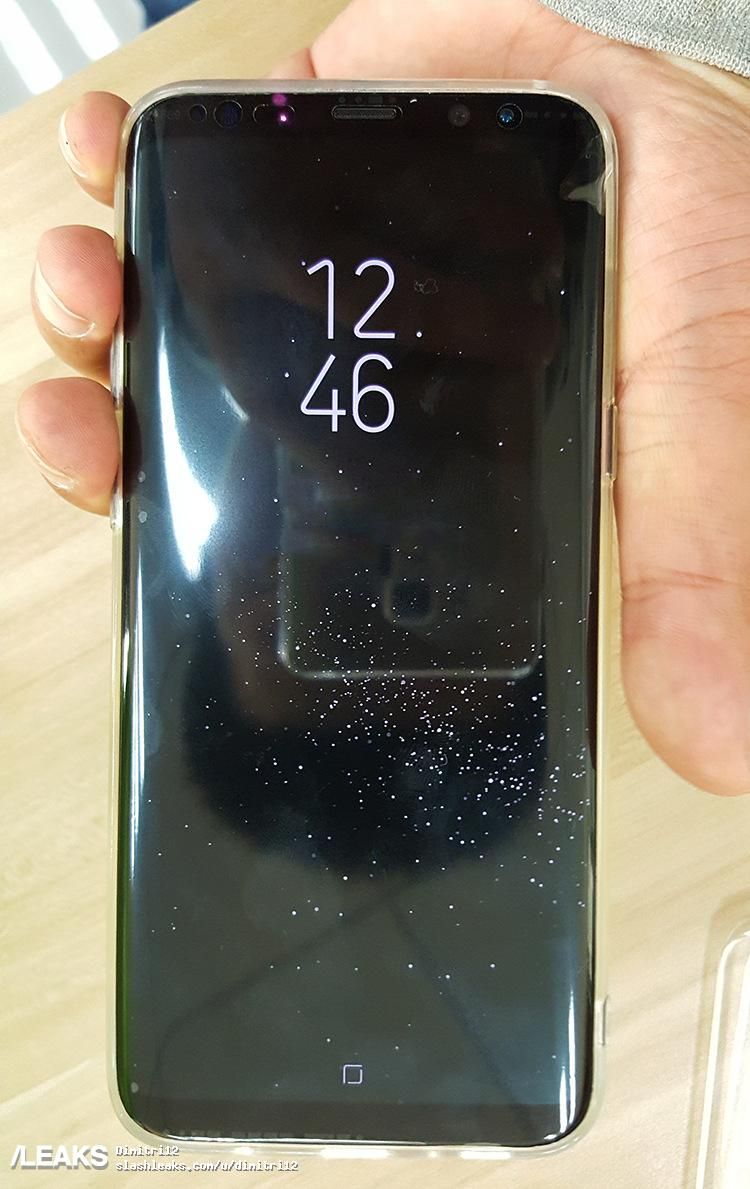
Samsung was planning to launch the Galaxy S8 on March 29th, but that seems to have been pushed back a month. Thanks to some leaky sources (mostly manufacturers of accessories who received test devices) we’ve been seeing photos, videos, and even press images leak ahead of its debut. A fresh batch of images have leaked today by a case maker, and they give us a slightly better look than most. Looks like Samsung is making some big design changes to its flagship smartphone.

It’s nice to see a close-up the new on-screen home button we’ve been hearing so much about. And just look at how just how small the front bezels are! The new all-screen look has clearly been aided by removing the physical home button from the front of the display, akin to the LG V20.On the back of the device, you can see the fingerprint reader in a rather odd place: right next to the camera bump. This confusing design choice appeared in early leaked photos and many hoped that this wouldn’t be the final spot by the time it got released. Oh well. It’s also interesting to know that the S8 will reportedly be sold with curved edges only, and not as options like with the S6 Edge and S7 Edge.
Samsung plans on releasing the S8 in two sizes: the 5.8-inch Galaxy S8 and 6.2-inch Galaxy S8+. Besides the sizes, both devices are identical from a hardware standpoint. You get an extremely bright and clear QHD+ SuperAMOLED display with 18.5:9 aspect ratio. The phones are powered by a Qualcomm Snapdragon 835 chipset. And Samsung’s digital assistant, Bixby, makes its debut, presumably triggered by a dedicated hardware button (maybe the fingerprint sensor doubles as a home button/Bixby button?). The official unveiling is set for March 29, when Samsung will hold an event titled “UNPACKED” in New York City.
As usual, our technicians’ mouths are watering, waiting to get their hands on the S8. No word yet on whether it’ll be as difficult to repair as previous models, but they’ve yet to meet a phone they couldn’t fix. Pre-order your S8 as soon as possible, safe in the confidence that you’ll be able to bring it to iFixYouri if you accidentally smash that beautiful curved screen.

App Review: Iron Snout+
What’s shakin’, bacon? Fight to stay off the dinner menu in Iron Snout+ for iOS and Android phones and tablets. Your porcine hero is surrounded by hungry wolves, and you must use your thumbs and kung-fu to go down swinging. Controls are very simple: the pig stays rooted in the center of the screen, and tapping or swiping on one half of the screen makes him attack in that direction. You can jump and duck to avoid attacks and set up lethal combinations, and also grab the weapons the wolves drop and swing or throw them right back! You just keep punching and kicking until you run out of life (represented by bacon strips) and your tally on how many wolves defeated is up in the corner. The new “+” version adds variety to the wolf enemies. From axe-wielding lumberjacks and billy-club-equipped SWAT officers to Pokemon trainers and Miley Cyrus-impersonating wolves (swinging in on a wrecking ball with a sledgehammer, of course), you’ll have your piggy hands full beating back the endless hordes. Iron Snout+’s gameplay is a blast, but it can easily get repetitive if you play it too much; there are only two modes (regular and sudden-death) and two levels, each with a different cast of wolf baddies. I keep it on my phone as an “I need to kill 5 minutes” option, usually while waiting for an Uber or to get through a boring conference call, and with its fast boot-up time (about two seconds on a Galaxy S6) it works wonders in that regard. As a beat-em-up game, it’s going to be a little violent. Cartoony blood spatters appear for a second or two after hitting a wolf, and it’s possible to punch their heads off (which you can grab and fling at foes), so it might not be great for the little ones. Hopefully future updates allows for turning off the “gore,” as otherwise, the game is perfect for kids, with its bright, cutesy characters and easy controls. It’s a free download with no in-app purchases, just some occasional ads. You can even give it a try in-browser here.
What Decade Is It? Nokia and Samsung Go Retro at MWC
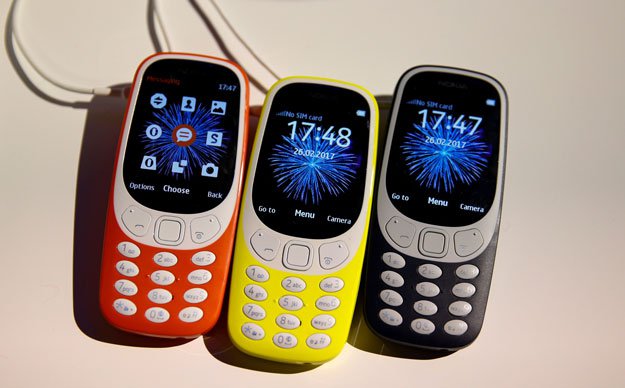
The past is present, masquerading as the future. As we recently mentioned, HMD Global is reviving the Nokia line, rolling out new smartphones under the brand but also bringing back its famed 3310 “dumbphone.” As revealed at Mobile World Congress (MWC), the question was finally answered as to whether or not the 3310 would be updated or be a true copy of the original. The answer is…a little bit of both. While the new 3310 has a similar front fascia as the old one, it appears have a more modern (Scandinavian?) look. The body is slimmer, trimmer, and lighter, and available in a rainbow of pretty colors. Under the hood, you get a 2.4” QVGA display (colors!), dual-SIM (a necessity for the outside-the-US market), a 2-megapixel camera, and even a microSD slot. The legendary battery life is present, but given a huge boost. You’ll get an entire month of standby time and 22+ hours of talk time (the old 3310 had a week and four hours, respectively). Priced at just $52, expect this phone to be a huge seller for industries that need to give employees a cheap, reliable to stay in touch with the home office (think construction and warehouses), as well as emerging markets, like Nigeria, where the old 3310 became a global bestseller. It might have some popularity in the US as an emergency for children, the elderly, and campers, as well as fans of Snake. Yes, you can still play Snake, albeit an updated version with modern graphics.
The phoenix-like return of the 3310 wasn’t the only piece of regressive-futurism at MWC. While Samsung talked about the Galaxy S8 and also debuted a few new tablets, the big talk was about their newest collaboration with…a pencil company. Staedtler, a renowned manufacturer of writing instruments, is famous among architects and engineers for their high-quality Noris wooden drafting pencils. The German company is lending the iconic Noris style, creating a Staedtler-branded S-Pen stylus for Samsung devices. Samsung has needed a larger S-Pen for some time now, especially as the stylus starting to appear even in the company’s laptops. Holding a small, thin stick in your hand and using it to do anything on a screen is evocative of old-school PDAs: annoying. The Apple Pencil was successful in this regard, giving creative types (and really anyone with big hands) a more comfortable form factor with which to use their products in more innovative ways. Teaming up with Staedtler, a brand and image adored by a large portion of these creatives, is a huge one-up over Apple in this regard.

And speaking of old-school PDAs, the original designers of the Psion pocket computer have returned, and wish to act like nothing’s happened in the past 17 years since their last product. Their Indiegogo campaign was recently launched, raising funds to put “Gemini” into production. The microcomputer is essentially a phablet with a full keyboard, and sports 64GB of memory, a 5.7” touchscreen, and, yes, again, a full keyboard. Gemini, if it goes into production, will likely be just as much of a niche product as the original. However, those of us who still desire to feel like John Connor hacking the ATM in Terminator 2 probably number in the hundreds of thousands, so maybe pocket computers could finally carve out a section of the market.

PGA Tour and Intel Want to Bring the Putting Green to Your Living Room
Fore! iFixYouri is at the Honda Classic, repairing phones, making friends, and watching some great golf. If you’re headed to Palm Beach Gardens to watch the action, look for our tent near the main entrance. iFixYouri technicians will be there for the whole tournament to give out freebies, repair phones and give them a boost with our charging station, and enter people to win accessories, repair discounts, and more! While there, we couldn’t help but wish there was a way to bridge the time-honored traditions of golf and the rapidly emerging consumer technology we deal with every day. Turns out, we’re not the only ones.
Eager to bring young, tech-savvy potential fans greenside at its tournaments, The PGA Tour is teaming up with Intel to bring virtual reality experiences to the game. Although it seems like they’re just trying to keep pace with the NBA, which has been offering weekly VR broadcasts, PGA officials say their VR experiences will be something special and interactive, and not just an immersive version of the same broadcast you’d watch on your TV. “We’d like for people to interact with the stream,” says Scott Gutterman, PGA Tour VP of digital operations. “If there are stats they want, to choose themselves, slide the leaderboard in and out (of their view).”
“We think golf is one of the hidden treasures to produce and create experiences in virtual reality,” said David Aufhauser, managing director, strategy and product, Intel Sports Group. “You can create experiences fans just can’t get, even if they’re there. You can bring in stats and data and other visual components that can complement the video part of it.” Aufhauser also hints at a growing demand: “Fans want to experience new ways to connect with sports and players that they love in wholly immersive experience. We see a lot of growth.”

Intel Sports Group’s virtual reality unit, Voke, tested the technology at the storied Riviera Country Club in Los Angeles ahead of the Genesis Open. While Voke has produced VR for the NFL and NCAA Final 4 basketball games, golf has unique problems that make it more difficult to reproduce in a virtual reality environment. Golf balls are small and difficult to track in flight when compared to basketballs or footballs. There is a lot more space to be covered on a golf course compared to a fixed playing area; a NBA court is 4,700 square feet, while the average golf course is 74 acres, or more than 3.2 million square feet. Resolution can be an issue when small objects are that far away from cameras, especially on the more popular (but less powerful) smartphone-powered VR headsets.
Voke uses three large pods of cameras to capture the action. Each pod features six pairs of cameras, whose feeds must be stitched together by producers and programs. The lenses can be swapped out depending on the sport or to capture different shots. Gutterman says that the size and lack of mobility of the camera pods will keep golf VR a “largely tee or green experience,” with the three pods triangulating the putting surface and capturing a 180-degree panorama of the green.
Voke’s founder, Sankar Jayaram, is optimistic that the VR broadcast will be entertaining regardless. “The way we designed our system, we can actually zoom in. One challenge in VR is that the cameras are far from the action. We can use different lenses and take you closer to the action—it’s one of the unique features we have—so you can get depth.”
A demo delivered a great depth-of-field and a clear view, arguably better than some spectators probably had a few yards away from the green. The VR stream showed dips and hills in the putting surface (broadcasts, even HD, tend to flatten out the greens). The Voke experience lets you switch views, so you can get the perfect camera angle for each putt attempt. Any VR viewer will work with Voke, whether you have an Oculus Rift, Samsung Gear, or even a phone-powered Google Cardboard.
Tired of White AirPods? Paint It, Matte Black
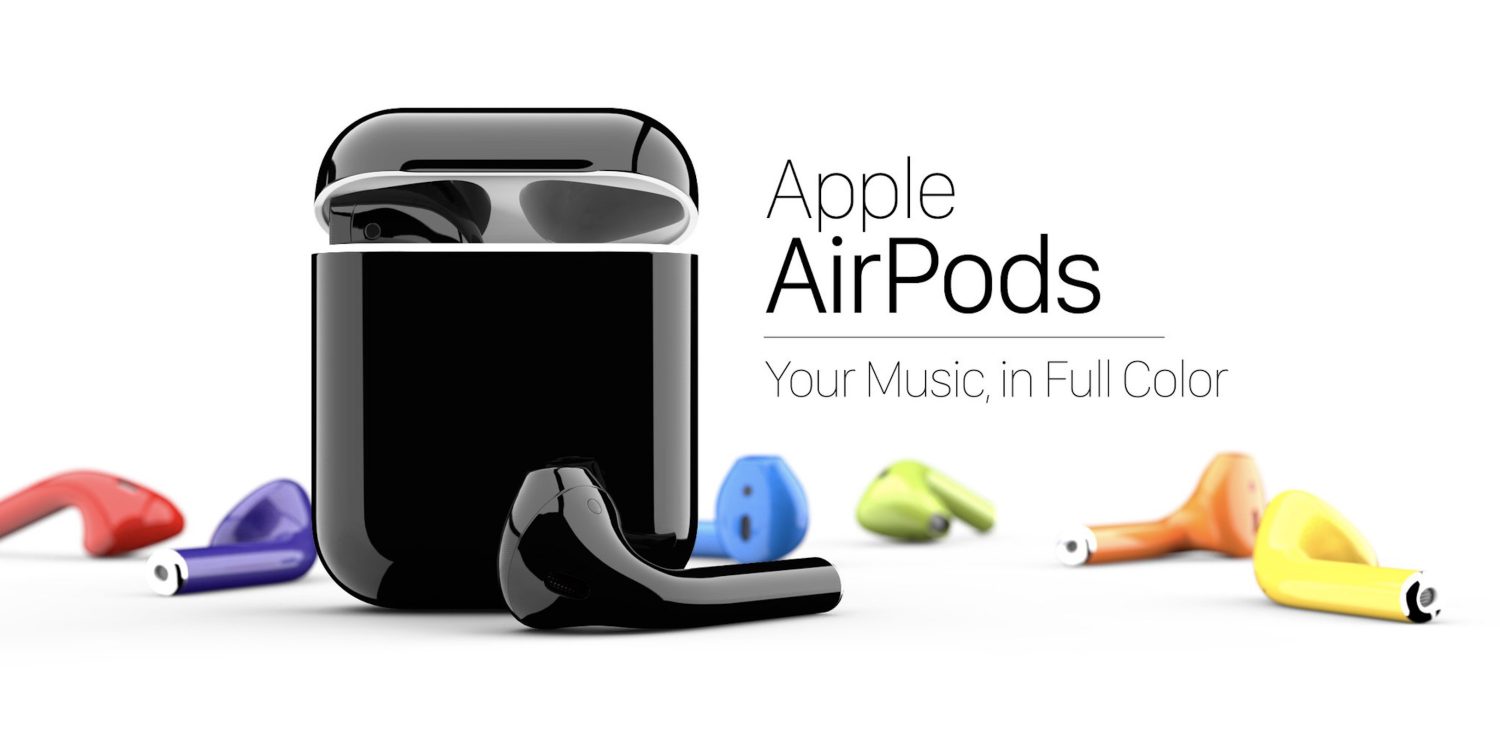
It didn’t take long after the Apple AirPods (delayed) release for consumers to already find gripes. The most petty of those complained, “Why are they only in white!? Why not jet black or rose gold or space grey! We want options!” Apple has done what they do best: ignored them. On one hand, they’re totally right in doing so. On the other, what’s wrong with wanting your tech to match your own personal aesthetic? The little white buds in your ears are intended to be just as iconic as the old earbuds were in iPod advertising, so it’s doubtful that Apple will provide a rainbow anytime soon. But if we learned anything from high school economics class, where there is demand, there is supply. So who’s got the plasti-dip?
Apple products are notoriously difficult to paint. Whatever proprietary glossy plastic the company uses is totally vandal-proof, which is normally a good thing…unless you actually want to mark your products somehow. The toughest, most durable paints are no match for the shiny white plastic that comprises most Apple tech. Even this writer attempted to put a dot on one Apple earbud to know, at a glance, right from left. The industrial-strength paint marker rubbed off inside of 48 hours. This unreal level of stain-resistance is especially problematic for those with an individual flair who like to color-mod their devices. That’s where the professionals come in.
Shortly after the AirPods release, a Brooklyn-based “team of skilled artisans” snatched up a snappy URL and began offering BlackPods. These are presumably black-painted AirPods, although it’s hard to glean details when their website only offers low-res renders of the product. They appear to be a matte finish, and that’s your only option; if the company can do other colors, they’re not offering them at this time. The price? $249 (about a $90 premium over the original) or $99 if you send them your own pair.
Black not your color? The good folks at ColorWare will send you AirPods in one of 58 colors, and you can choose between matte or gloss finish. They’ll even do each earbud and the case all in different colors, if you so choose. At $339 ($140 and $40 extra for a painted charger/case, on top of the $159 cost) so at that point, you should just forgo black-on-black and go with someone that expresses your individuality a bit more. We’re currently trying to convince our CEO to buy these slick AirPods in iFixYouri colors for everyone in the office…

…and maybe a matte-green iMac for each desk. Got to represent the team colors, you know?

Yes, ColorWare does expert paint jobs for all kinds of consumer tech devices. They have a long history (it’s a family-owned business dating back to 2000) and, more importantly, a beautiful website. It’s easy to burn up your lunch break playing with the visualizer and drooling over color combinations for your future disposable-income purchases. What’s your favorite look? Take a screenshot and leave it in the comments below!
Because ColorWare and similar companies must disassemble the device to paint it, the warranty is obviously voided in full. ColorWare does provide their own separate warranty for painted devices, but in case something goes wrong with your AirPods or other painted Apple product, you can’t rely on AppleCare like you normally would. That’s where iFixYouri comes in. If you have a color-modded smartphone, computer, or camera and the screen breaks or battery dies or one of a million little things goes wrong with it, bring it to one of our 15 locations or use our mail-in service and the iFixYouri technicians will diagnose the problem (for free!) then repair it using high-quality parts and precision tools. And we’ll be sure to not scratch the finish.

Employee Spotlight – Quinn
Quietly stepping into the spotlight this week is Quinn. Silent guardian of our Donald Ross location in Jupiter, Quinn is quick to greet customers with a smile before quickly and efficiently repairing their iPhones and iPads. He’s new to the company, having been with us only since the new year, but is quickly proving to us that he’ll be an essential employee for a long time to come. A Jupiter native, Quinn studied information technology at University of Central Florida (where iFixYouri is the official repair partner) and is currently working towards his Bachelor’s at Palm Beach State University. When not fixing computers, he still works on them, as he enjoys building PCs and gaming on them. His current favorites include Overwatch, Heroes of The Storm, Diablo 3,and Elder Scrolls: Legends. We’re glad to have this former ice cream-scooper on board with us and appreciate all the hard work he does. Thanks, Quinn!